I recently had the opportunity to attend a Meet The Makers event hosted by Inter Beaujolais. The event stopped at only a few U.S. locations and lucky for me, Atlanta was one of them. The event was moderated by 3 Parks Wine Shop owner, Sarah Pierre, and hosted at the lovely Le Bon Nosh.
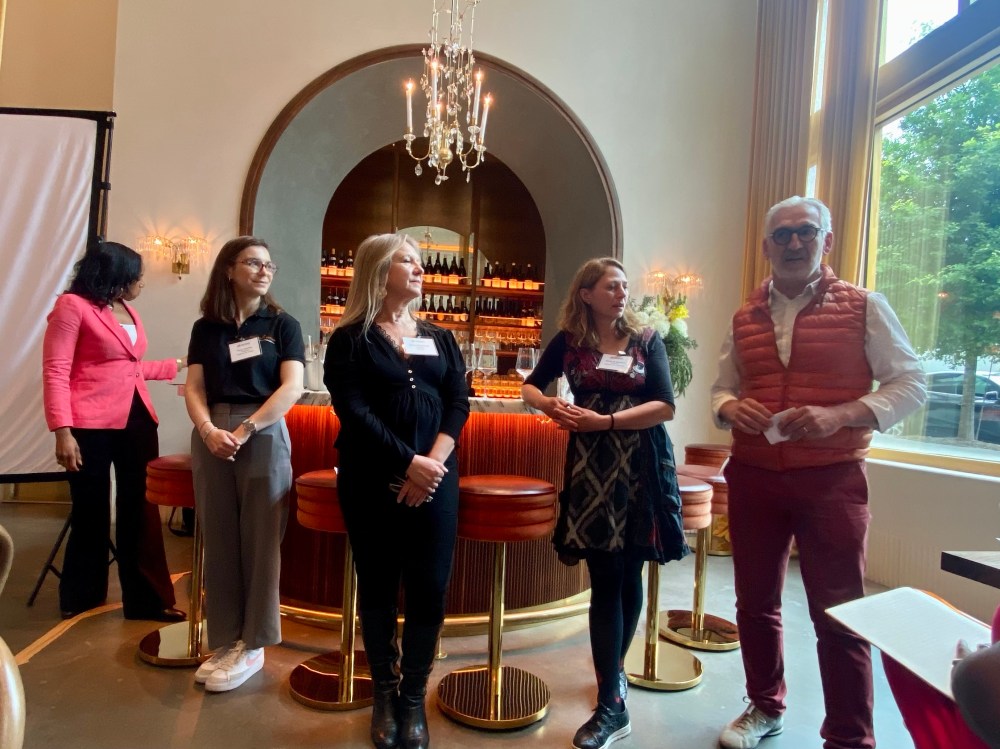
Having visited this region for exactly one day, I was thrilled to be able to meet and talk with four winemakers from Beaujolais to get a deeper understanding of the region and the wines.
Beaujolais Overview
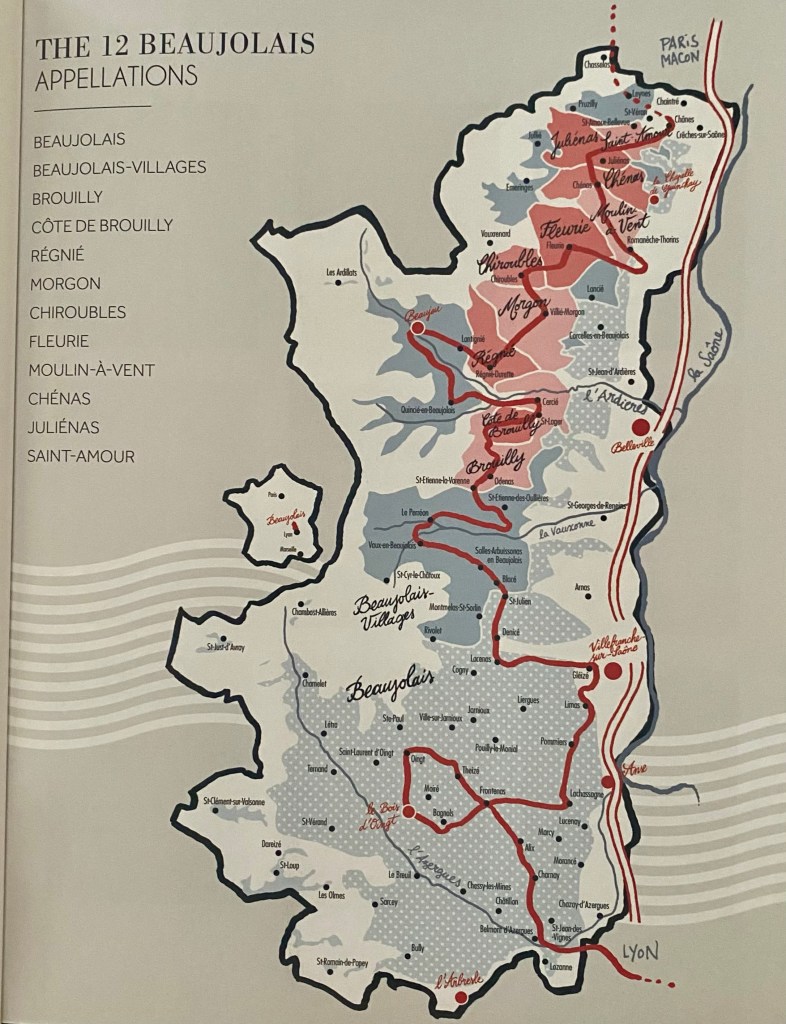
The Beaujolais wine region covers roughly 35,800 acres and runs north and south between the Burgundy (north) and Rhone (south) wine regions. To the east is the Saone River and to the west the Massif mountain range. The overarching AOC’s in the region are Beaujolais and Beaujolais-Villages where red, white and rose wines are produced. There are 10 Cru regions that produce only red wine.
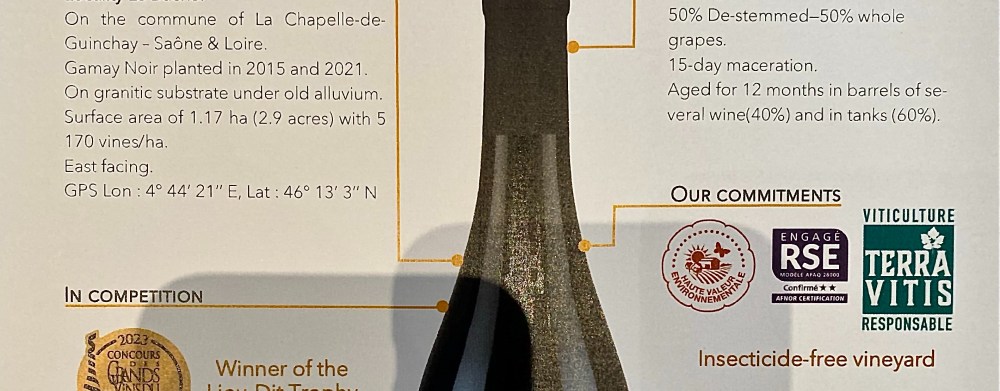
Beaujolais led the way of organic and sustainable practices in France. In 1989, long before sustainable practices were recognized by most, winegrowers from this region began studying the best ways to preserve the land, conserve water, and have less intervention in their wines. In fact, Jules Chauvet, considered the father of the natural wine movement, is from Beaujolais.
Today this movement is called agroecology and while there are several certifications for sustainability, France as whole is embracing and moving toward the High Environmental Value (HVE) certification. As of 2020 there were more than 200 HVE certified vineyards with more coming every year.
Beaujolais is home to an incredible diversity of soil, partly because the region was never covered by ice during the ice age period. A fact so fascinating that between 2009 to 2018, the soils of Beaujolais were studied in detail – over 15,000 soil samples from more than 1,000 sites were taken.
This vast diversity of the soils makes the region so unique that in 2018 Beaujolais was recognized as a UNESCO Global Geopark. This of course makes the winegrowing here very exciting and creates a true sense of place for each Cru region.
We Can’t Not Talk About Beaujolais Nouveau
Beaujolais has always made serious wines, but many consumers in the U.S. are most familiar with Beaujolais Nouveau. Beaujolais Nouveau is the wine that is released on the third Thursday in November of the year the grapes are harvested. These wines are meant to be a celebration of the end of the current year harvest. They are inexpensive, and simple and meant for a party. The wines are often criticized for the very thing they are meant to be – simple. Perhaps because most consumers and wine professionals alike, do not understand the purpose and intent. Beaujolais Nouveau is no more the best wine this region has to offer, than any other region’s 1-3 month old wine would be.
This is not to say that Beaujolais Nouveau is something that winemakers are ashamed of, or would like to see go away. Just the opposite is true. It is a serious business, representing approximately 20% of wines produced. The region celebrates these wines and enthusiastically identifies with them. It is time though, for consumers to discover just how beautiful the other 80% of wines can be.
The Wines
Most people think of only the Gamay grape when thinking of Beaujolais, and rightly so, 95% of production is red wine from this grape. Rosés are also produced from Gamay.
The white grape of Beaujolais is Chardonnay. I will fully admit this was a surprise to me. Despite having formal wine education and visiting the region, this is something I did not know. In my head the white wines – which represent less than 4% of production – were made up of white Rhône varieties, but this is 100% incorrect. Chardonnay should not have surprised me so much when you consider that Pouilly-Fuisse is just over the northern border. This is exactly why I never get bored with the subject of wine.
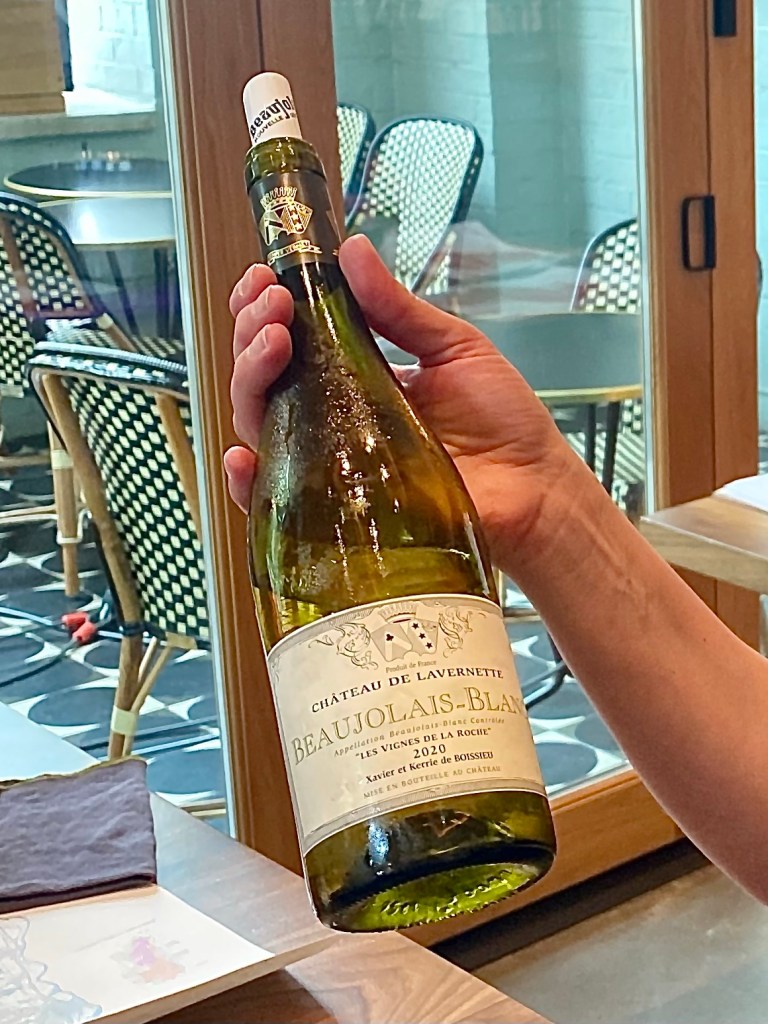
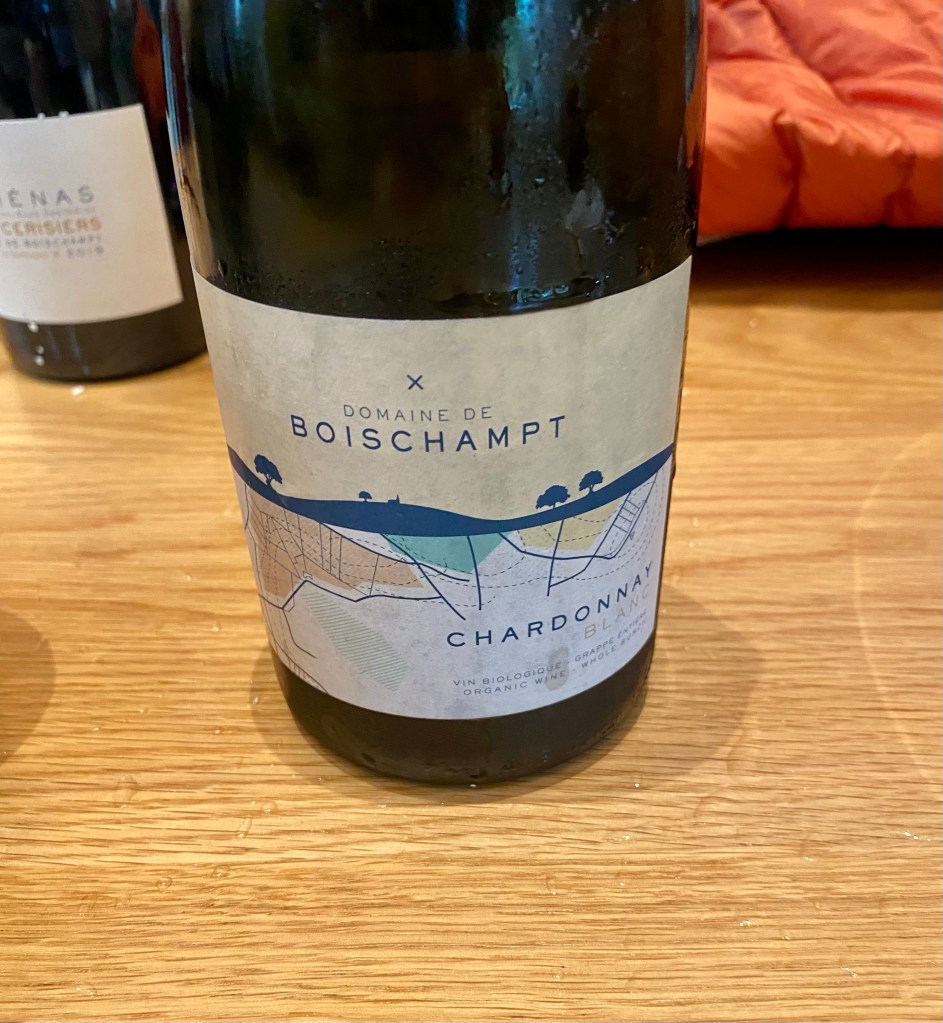
I was able to try several white wines and I do think that Chardonnay wines from this region are a truly unique expression of the varietal. I hope that production of white wine will increase and export distribution will follow. As it stands, if you ever have the opportunity to buy a white wine from Beaujolais, I’d snatch it up without hesitation.
I also tasted many red wines from several different regions in Beaujolais. The Chenas from Chateau de l’Eclair is one that I cannot get out of my mind. Deliciously elegant, it bordered on ethereal. Chateau de l’Eclair wine is not currently distributed in Georgia, but thanks to events like this, I’m hoping that will change soon.
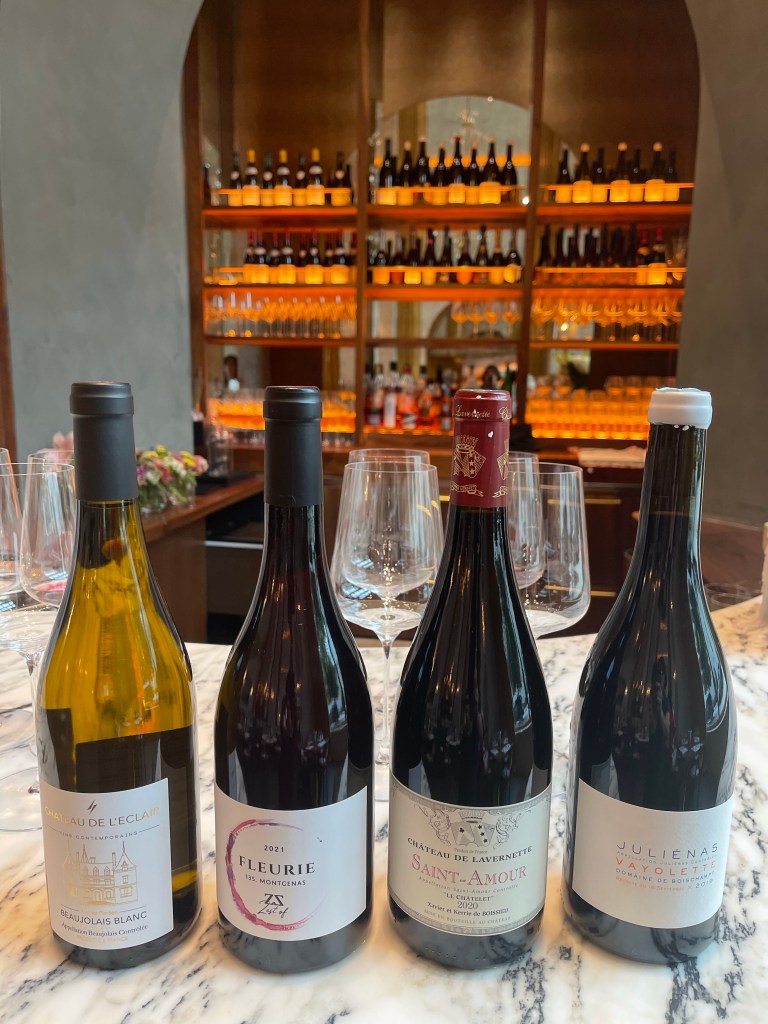
Annual wine production in Beaujolais is around 70 million bottles, 60% of which stays within France. The remaining 40% are sold in over 150 countries. I for one, would love to see a much larger selection in the United States. Not only of Cru selections, but white and rosé wine.
The Future of Beaujolais
There are five Premiere Cru designations pending with INAO, the government agency that governs these things in France. The first will likely come to Fleurie, but there is no telling exactly when that will become official, since it is a government process (some things are the same everywhere). Regardless, it is a big step for Beaujolais.
Premiere Cru designations will validate the efforts and passion of a region that puts it heart and soul into the wines they make. Not only making beautiful and elegant wines, but having led the way in doing so with a deep sense of responsibility for the environment.
I urge you to seek out the wines of Beaujolais. Ask for them at your local wine shops. You’ll not only help create demand, you’ll wonder why you haven’t been drinking more Beaujolais wine.
 Side Hustle Wino
We were lucky to “Meet the Makers” and sample their wines! What a great article reviewing the event! Beaujolais Crus are my go-to alternative for less pricy Bourgogne Pinot Noir. Beaujolais wines have so much to offer.
LikeLiked by 1 person