I think it is a universal truth that most people shy away from things they can’t easily pronouns. This is a huge hurdle for Greek wines. Here are phonetic spellings to help out with this grape and this region.
Xinomavro pronunciation: “ksee-noh-mah-vroh”
Naoussa pronunciation: “now-oo-sa”
May was a great wine month for me, as I had the opportunity to attend another masterclass showcasing the Xinomavro grape from the Naoussa region of Greece. The event was hosted by the Naoussa PDO, at the lovely Vino Venue.
This class really blew me away, partially because I am so unfamiliar with Greek wine to begin with, but also because it showcased 15 different wines made from the same grape, from the same region and they were wildly different.
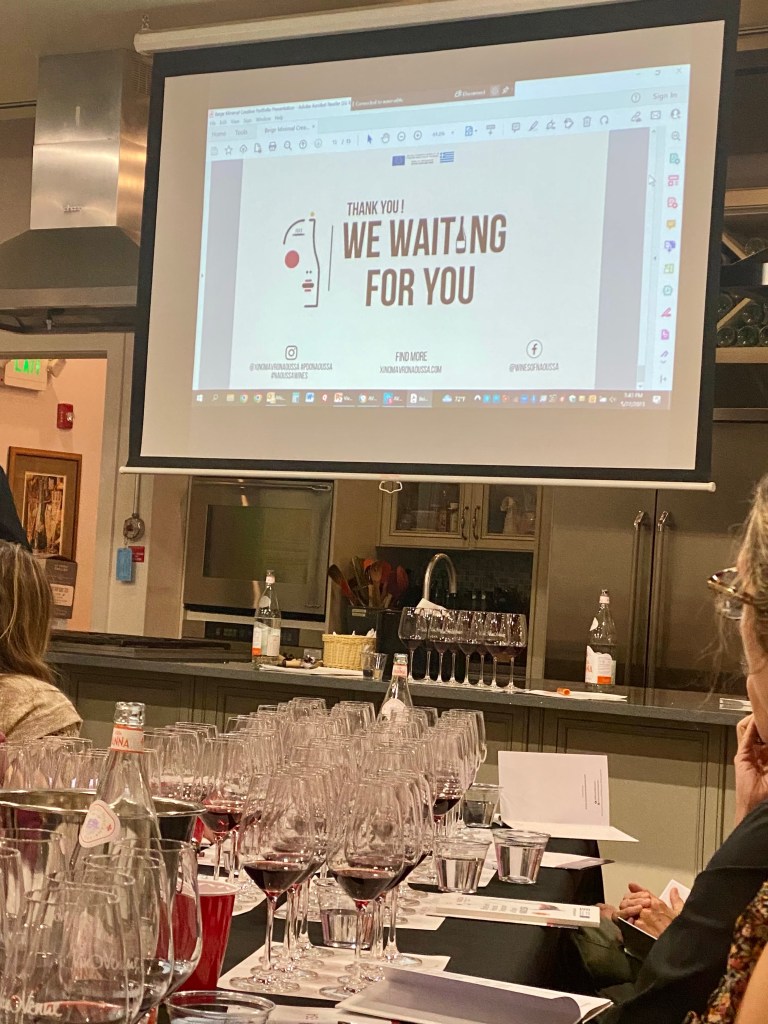
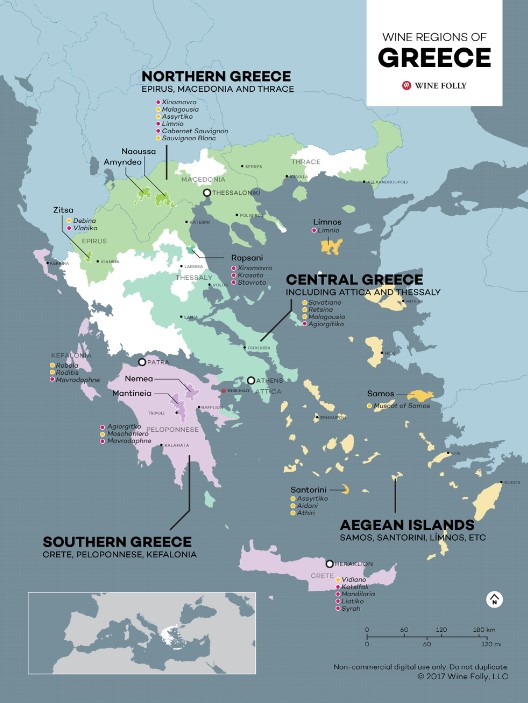
Naoussa is located in northern Greece, within Macedonia. As with anywhere in this part of the world, winemaking has been happening since antiquity. Commercial wine production began in the 1500’s with exports to parts of Europe. In the early 1900’s Phylloxera did not spare Naoussa and the entire region was decimated.
Modern day winemaking really began in the 1970’s, with official PDO designation in 1971. The region produces only red wines made from the indigenous Xinomavro grape. Today there are approximately 1,200 acres of vines that grow at varied elevations along the foothills of Mt. Vermio. The wines can be dry, semi-dry or semi-sweet. The name Xinomavro translates roughly to tart (xino) and black (mavro).
The mind blowing thing about this tasting is the absolutely incredible diversity of the wines tasted. This perhaps makes sense when you consider that the Xinomavro grape skins can appear from very dark – nearly black – to a much lighter red depending on the microclimate the grapes find themselves in.
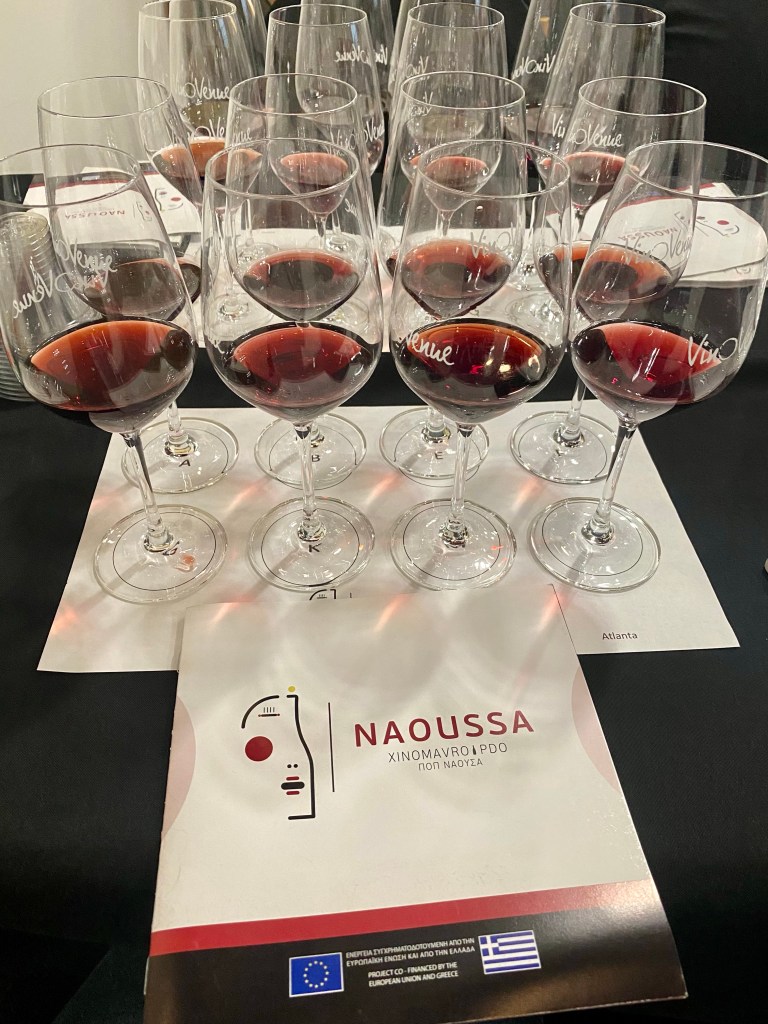
The PDO recognizes this diversity stating that a typical Naoussa wine can have aromas ranging from “violets to olive paste and from tomatoes to tobacco and gooseberries.” The commonality that I found was the body weight of the wines, which felt medium to me across the board. All the wines had a higher acidity, but also bold tannins, a beautiful thing when perfectly integrated. I think Xinomavro is a perfect warm weather red.
There were a few of these wines that were incredibly complex and delicious. There were some that I call “food wines” too much acidity for mine own personal palate to enjoy on their own. Others were just perfectly quaffable.
All of the wines were poured blind, and although we were allowed to see the label if we wanted to, we were asked not to reveal information about specific bottles or producers. The reasoning explained was because they were travelling to other regions with this masterclass and were using different wines or something to that effect? I didn’t quite understand that but, of course will comply with that request.

The wines ranged in age from 2020 to 2013 and the older ones were definitely more complex, as well as elegant. Xinomavro wines have superior aging potential according to the winemakers. As stated above the range of aromas and flavors was astounding. My notes include: smokiness, minerality, vegetal, kalamata olive, cherry, strawberry, fig, milk chocolate, dark chocolate, iron, woodsy, floral.
Here’s the really sad thing to me, without being able to identify the wines, there are no specific wines for me to tell you to try and seek out. Or to buy if you ever see one. But hey, if you do see a wine from Naoussa, you should definitely grab it, even if you don’t love it, you’ve got something pretty rare to take to your next get together.
 Side Hustle Wino