A couple of weeks ago I had the honor or facilitating a tasting for a chapter of the Philanthropic Education Organization Sisterhood. This charitable organization provides educational opportunities for women through scholarships. This tasting also occurred in March which is Women’s History Month, so I decided there was only one theme appropriate for this event and that was “Women in Wine.” There were about 26 people in attendance and I believe fun was had by all and that the wines were a hit.
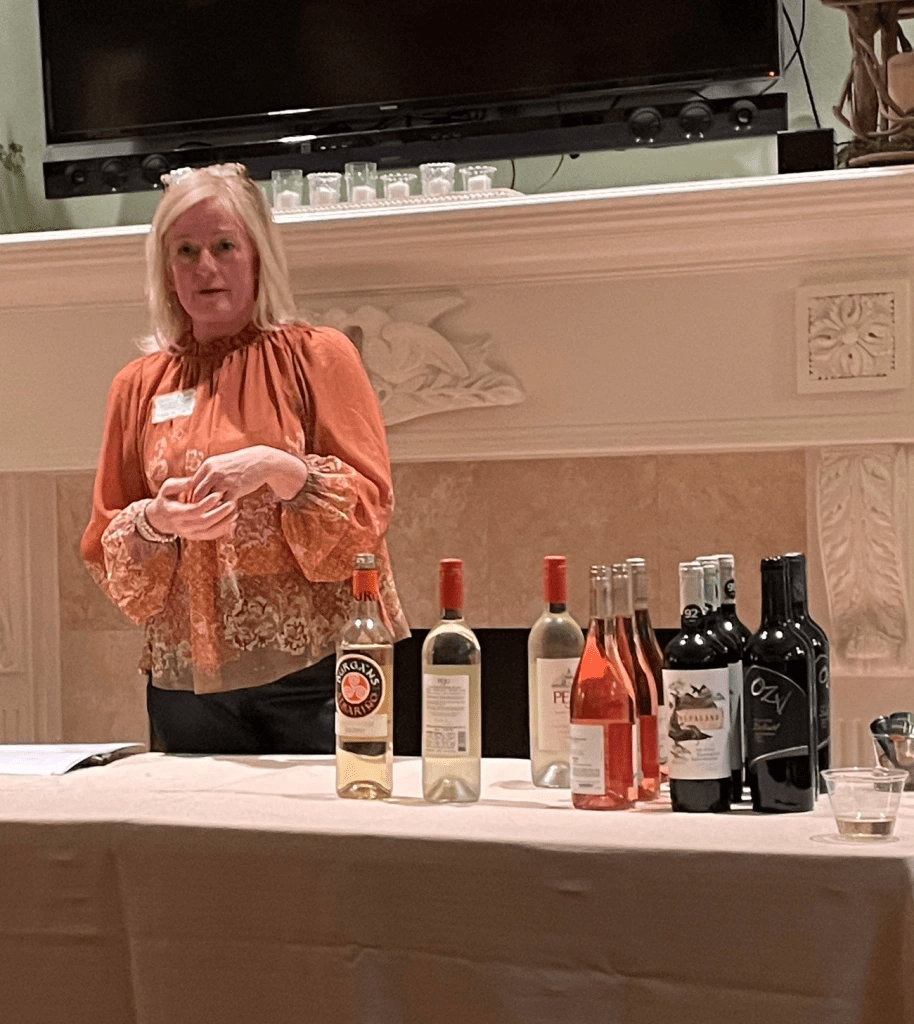
Fast forward several weeks and here we are in the middle of Earth Month! I don’t often procrastinate, but it definitely worked in my favor for this post, as all of these woman focused wines are grown and made with sustainable practices.
The wines I chose have a woman at the core of the story, whether as the winemaker or the owner. I also did not know my audience and wanted wines that would be a hit with a wide range of palates. I always assume some are more advanced, some don’t usually drink wine, and some are regular wine drinkers. I also had a budget of $20 a bottle and I needed 5 different wines. Here’s what I chose.
Martin Codax Winery|Burgans Albariño|Rias Baixas|$16.69
Founded in 1985, the Martin Codax winery is named after a medieval Galacian troubador known for his poetry – how cool is that? The winemaker, Katia Alvarez, has been with the winery since 2005.
Historically Galacia is a fishing region, requiring men to be at sea for long periods of time. This left women on land to take of EVERYTHING else and that included grape growing and winemaking. This makes Galacia a rare wine region in which women have always been well represented. It has an interesting history originating with Celtic tribes, before being conquered by the Romans. I love the historical references of both the winery’s name and Celtic label.

This wine is a favorite of mine and I always like to throw in something that I think most people might not have experienced before – it is a tasting after all! The calling card of Albarino is a salinity note and I love that in a crisp white wine. Even with its higher acidity, it somehow has a very satisfying mouthfeel. Stone fruit and citrus notes, with tons of minerality.
Dedication to reducing their carbon footprint, not only in the vineyards and production of the wine, but in everything the winery does, across all human capital is a primary focus to Martdin Codax Winery. They have participated in numerous research, development and innovation projects that have improved the sustainability efforts, in addition to adapting to climate changes. Alvarez has travelled the world speaking about not only her winemaking, but these initiatives and what they have discovered because of them.
I’m not sure if this was an immediate favorite with everyone but I’m glad that everyone got try something new.
Mathilde Chapoutier|Soldre duches d’uzes|rhone valley|$16.99
So, no one told me that one of the members of my audience was a French woman who grew up just outside of Avignon! I think speaking French is always intimidating for an American, and then add the subject of wine and geez Louise lol! Luckily this woman was absolutely lovely and helped with some pronunciation but swore on her life she actually knew nothing about wine. I didn’t believe her but thought it was very nice of her to try and put me at ease.
Mathilde Chapoutier is the daughter of the prolific and world renown French producer Michel Chapoutier. I have written about him before because he is one of my favorite producers. Mathilde has gained many accolades for her own wines and continues to grow her own portfolio.

I loved finding out that Mathilde Chapoutier was on the French National shooting team and was an award winning shooter herself. It made me giggle that she studied International Relations and Conflict Resolution in college. She went on to study finance in China, where she also began creating relationships with restaurants and distributors for her family’s wines. This was really the beginning of her wine career.
Mathilde’s wines, although her own, fall under the umbrella of Mason Chapoutier. Michel Chapoutier began a commitment to biodynamic growing and winemaking practices, following Rudolph Steiner philosophies in 1991. That is a long time before it was the norm. His belief is that it is not only necessary for the Earth, but for the wines to reflect the true terroir of their origin.
A blend of Cinsault, Grenache, and Syrah, this rosé is intentionally made. It has very brief skin contact before being moved to stainless steel tanks. There were fruit notes with a beautiful floral note that made this wine a big hit.
I am still surprised at the number of people who think that all pink wine is sweet. In my opinion, a rosé is mandatory in a tasting. It is an incredible food wine that goes with any and every thing – especially guacamole and tortilla chips.
Peju Winery|Legacy Sauvignon Blanc|Napa Valley|$24.99
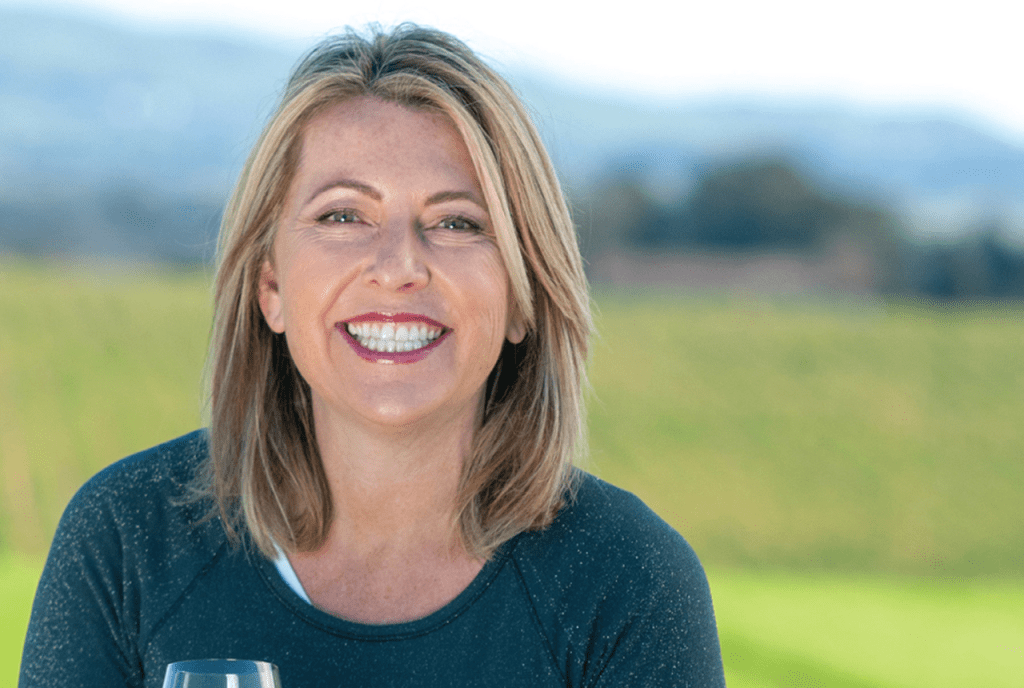
Winemaker at Peju since 2006, Sarah Fowler is currently the Vice President of Winemaking and Operations. She was also voted Best Local Winemaker by Napa Valley Life Magazine three years running, beginning in 2016.
I chose this wine because of Sarah Fowler, however, in researching prior to the tasting, I was really blown away by founder Tony Peju’s impact on Napa Valley and California wine in general. Napa County sued Peju for selling wine from his property because the wine was not made on site. He grew the grapes, but in the beginning, before he could afford to build the winery, he used a custom crush facility to make the wine. Napa County said this was illegal, but they lost. This changed the game for many small and new wineries and he became known as the Godfather of Custom Crush. I found this fascinating.
The estate vineyard in Rutherford has been certified organic since 2007 and the remaining vineyards are expected to be certified within the next couple of years. All of the vineyards gained the Fish Friendly Farming certification in 2019. Peju has also gain the Napa Green certification for all of their vineyards and their winery operations.
This wine sees no oak and is aged in stainless steel so you get a great expression of the 100% Sauvignon Blanc grapes. There were stone and tropical fruit notes, a floral and mineral note that all came together with a beautiful full mouthfeel that steel had excellent acidity. This one was a hit.
Catena Zapata|Altaland|Cabernet Sauvignon|Salta|$19.99
The woman behind this wine is Laura Catena, world renown for her passion and expertise about Argentinian wine, she is the daughter of Nicolas Catena Zapata, but very much a phenom in her own right.
Nicolas’s grandfather had immigrated to Argentina from Italy in 1878 and had been making wine in Mendoza for that long.
Nicolas fell in love with Napa Valley, when he became a visiting scholar in economics at UC Berkley. He and his wife began making visits to Napa Valley and became good friends with Robert Mondavi.
It became Nicolas’s goal in life to create world class wines that could compete with Napa Valley and Bordeaux. He wanted to make Argentinian wines in the California-France style – which to most of us is an oxymoron – but don’t question a man’s passion and dreams. He is credited with making Argentinian Malbec known around the world. But, his heart’s desire was to create a Cabernet Sauvignon that would hold it’s own among the world’s great wines and in 1995 he finally did. But enough about him, this post is about women in wine!

Laura Catena set out to become a medical doctor and that she did. She is Harvard educated and was an ER doctor in San Francisco but gradually became more and more involved in the family’s wine business. She eventually decided to devote herself to promoting and educating the world about the amazing wines coming out of Argentina. The apple did not fall from the tree. Her Dad is often called the Argentinian Mondavi because of his passion for promoting wines was tireless and truly changed the landscape forever. But, Laura Catena’s passion on the subject just might exceed her Dad’s. She founded the Catena Institute – Argentina’s version of UC Davis, and in fact, the two institutions collaborate.
Laura Catena is considered an eco-pioneer through her work at, and in the founding of, The Catena Institute. Forbes magazine writer, Erica Duecy, interviewed her on this subject and you can read the article here . Having visited the Mendoza region, I can attest that sustainability and eco-friendly practices are at the forefront of every winery we visited. With basically zero rainfall each year, the region relies entirely on snowmelt from the Andes to irrigate not the only the vines, but the population. Everywhere we visited had a focus on caring for and respecting the environment.
This Cabernet Sauvignon comes from the Salta region of Argentina, often referred to as “slow Argentina.” Unencumbered by the hustle and bustle of more developed regions, it at the northern end of the country and is known for its high altitude vineyards. Large diurnal shifts give the grapes an intense phenolic profile. This wine had notes of plum, leather, black currant, and white pepper with a savory smokiness and noticeable minerality. If comparing to a Mendoza Cabernet Sauvignon, I would say this one comes off a bit lighter, with medium tannins, but is still bold in flavor, with great acidity. A wonderful wine for the $20 price point.
Oak Ridge Winery|OZV Zinfandel|Lodi|$11.99
I like to throw a Zinfandel in at the end of a tasting because after drinking other wines, Zinfandel often comes off as sweet and I love to talk about sweet versus dry wine. I believe there is a common misconception of thinking that fruitiness or, in this case, the grape profile’s calling card of “jammy-ness” with sweetness. And I get it, it does taste sweet but it’s not from residual sugar.
This wine is also an incredible QPR at $12 a bottle. I had pushed the $20 per bottle budget on some of the other wines, so this is where I made up for that. I discussed this choice with the hostess and she told me that she happened to know that this wine was a favorite among some of the guests, and when I throw things like Albarino into this mix, I like to end on a nice crowd pleaser that everyone is happy with.
Oak Ridge Winery began in 1902 with another Italian immigrant, Angelo Maggio. In 2002, after 100 years, the family put this winery on the market and Angelo’s grandson, Rudy, bought it. He is still there, as are his three daughters, who run the winery with him today. They also have a woman winemaker, Laura Durham.

Oak Ridge literally represents the American Dream. The Maggio’s immigrated to the United States and started doing what they knew how to do best in the New World. Five generations later, that same family is still carrying on the legacy. I love that. It literally gives me goosebumps.
The Lodi AVA is known for Zinfandel. “Old vine” is a term that is thrown around a lot, especially with regard to Zinfandel. There is no official, or legal definition as to what old is, but it is widely agreed that vines north of 50 years old are unquestionably old. Lodi has tons of vines that fall into this category, with a some that are even 100+ years old.
Despite being the largest AVA in California and growing nearly 20% of all the grapes grown in the state, Lodi doesn’t always get the love and respect it deserves. Esepcially when you consider that Lodi is also the home of the sustainability movement in the United States. The Lodi Rules are guidelines for sustainable growing practices that were the first of its kind in the U.S. Now used throughout California, many other states, and even Israel, Lodi was the birthplace. The Maggio family, who consider themselves farmer’s first, have lived and cared the land they own for more than 100 years, and all of their 2,500 acres of vineyards are Lodi Rules certified.
This bottle has an interesting grape blend: 84% Zinfandel, 7% Rubired, 6% Petite Sirah, and 3% Malbec. I had to look up that Rubired as I had never heard of it. It is a red fleshed grape which is very unusual, most have white flesh. It was discovered in California in 1958 by Dr. Olmo and is a hybrid of Tinto Cao and Alicante Ganzin (also a pink flesh variety).
It does come off a bit sweet, especially if you just had a cool climate Cabernet Sauvignon immediately before it. I do think that Zinfandel wines can push the limits of what constitutes a dry wine which can range anywhere from less than 1 to 12 grams of sugar per liter, although this varies depending on which resource you look at it.
This wine might not be a high end, super complex wine, but it is an everyday wine that has a huge fan base. And why wouldn’t it? Easy drinking with notes of triple berry pie and cinnamon graham cracker, it has plush, velvety mouthfeel.
Cheers to women in wine, owning, promoting, and making! And to growing and producing wine in ways that help to not only protect the Earth but give back to it, what we are taking from it.
Do you have a favorite woman in wine? Or a favorite organic or sustainably grown and made wine? Please share in the comments.
 Side Hustle Wino
Congratulations on facilitating such an interesting tasting of Women in Wine. I always love reading about women in the wine industry! Cheers!
LikeLiked by 1 person
thank you Jane!
LikeLike