Italian wines have a quality hierarchy that came into existence in the late 1960’s. These designations made official rules and regulations of what had previously just been hundreds of years of tradition. This is mostly a good thing in a modern world right? Perhaps it was bad timing, or perhaps it was in direct response to Italian wines having an identity crisis on the global market during this time period. Thought to be mostly cheap table wine, Tuscan wine in particular, was the poster child – cheap jug wine, wrapped in straw for added cultural authenticity.
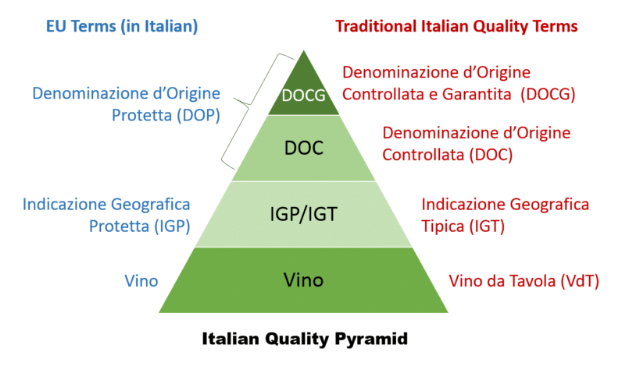
There was also a winemaking movement happening in Tuscany – the Super Tuscan wine was born. Super Tuscan is an unofficial term that refers to any wine made that includes grapes that are not indigenous to the region – in Tuscany, this would be predominantly Sangiovese. Super Tuscans wines include international red grapes, usually French varieties. Some incorporate Sangiovese into the blend and some do not. There were two producers in these early years – the late 1960’s and early 1970’s – that are considered to be the “OG” Super Tuscans: Sassicaia and Tignanello.
In 1968, the Tenuta San Guido winery, located in Bolgheri, released a wine for sale that they had been keeping for private use for many years. This wine was Sassicaia. Comprised of only Cabernet Sauvingon and Cabernet Franc, no Sangiovese. Thanks to the newly implemented quality designations, this meant that the wine not only flew in the face of the region’s winemaking history, it did not meet the rules and requirements established for DOC and DOCG quality designations. Such a crazy idea this was for a wine from Tuscany, it was not even given IGT status, but labeled a mere Vino de Tavola – table wine!
The quality designation rules also became a problem for the Antinori family. In 1971 they added 15% Cabernet Sauvignon to their Tignanello, which was still 85% Sangiovese. Tenuta de Tignanello’s estate is located within the Chianti Classico region and it was intended that this wine carry the Chianti Classico DOCG label. Instead it was also classified as Vino de Tavola.
It took some time, but the Sassicaia and the Tignanello were well received and both received critical accolades. Tagnanello became world famous when Robert Parker gave the 1985 vintage a 100 point score. Back when such a thing was novel and might have actually meant something. Tuscany was suddenly on the global wine stage in a very positive light, opening the door for a global rebirth of Italian wine.
Super Tuscans wines can now qualify for DOC or DOCG designation. In 2013, the Bolgheri Sassicaia DOC region was created. This tiny subregion includes literally only the estate of Tenuta San Guido. I guess that makes up for that original table wine designation for Sassicaia. Tignanello remains an IGT wine, as do most Super Tuscan wines.
Today a bottle of Sassicaia will set you back about $300, and Tignanello will cost a mere $175. In my opinion the importance of the Super Tuscan in the history of Italian wine cannot be overstated. It turned a centuries old wine making region, steeped in tradition, on it’s head. Super Tuscans paved a road, defined their own rules, and have held the honor of being some of the best wines Tuscany produces for decades now.
Super Tuscan wines have withstood the test of time and charted their own course in history. Today it is common place to find a SuperTuscan in the line up of most wineries. Which brings us to the real purpose of this post.
Fattoria San Michele a Torri
John and I visited an amazing Tuscan farm and winery in April of 2018 – Fattoria San Michele a Torri. I fell in love with their wine. When I tell you this wine made me do crazy things, I am not exaggerating.
After arranging to ship a case home, I inquired about availability in the States. Long story short, this wine caused me to obtain an importing license, find a distributor – who went to Italy and met with the people I met. Everyone loved each other and I thought I was not only going to have access to this wine regularly, I was going to be the importer. A dream I had not even know to dream. The whole thing fell apart and was truly one of the greatest heartbreaks of my life. But that is a story for another day.
Eventually I picked myself up, dusted myself off, and did what any self-respecting wine lover would do. I ordered another case of wine direct from the winery and paid the ridiculous shipping from a farm in Tuscany to my front door in Kennesaw, Georgia. I maintain that it is totally worth it, but I do hope my next case will be bought onsite and tucked into my trusty wine suitcase.
Located about 10 miles outside of Florence the farm sits in the heart of the Chianti region. The property includes olive trees, and a myriad of other crops in addition to their vineyards. Our lunch there included meats from their Cinta Senese pigs, eggs from their chickens, and olive oil from their olive trees. They have been 100% organic in all of their farming since 1993, employ sustainable and biodynamic practices in their operations, and are always looking for ways to improve their relationship and impact on the earth.
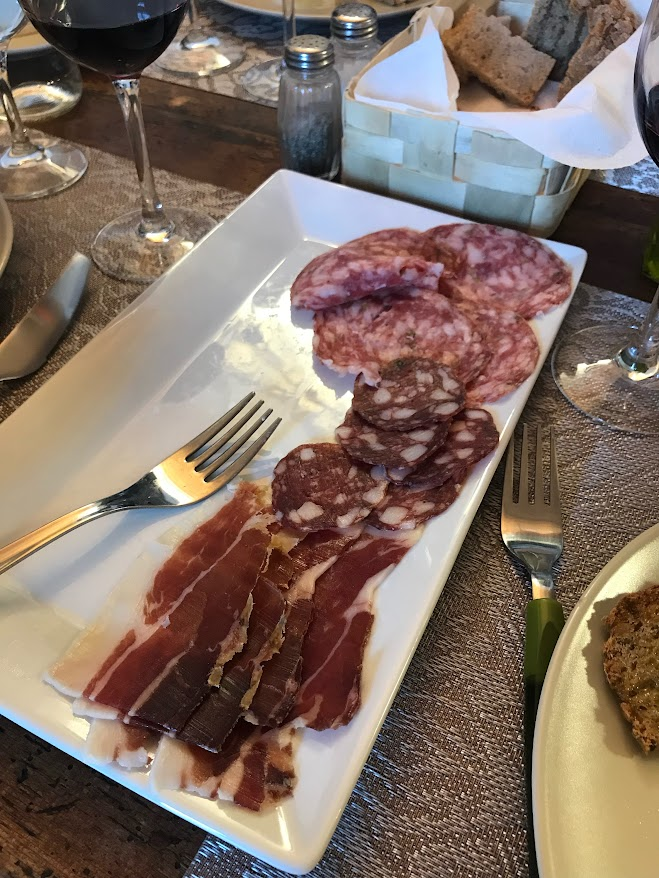
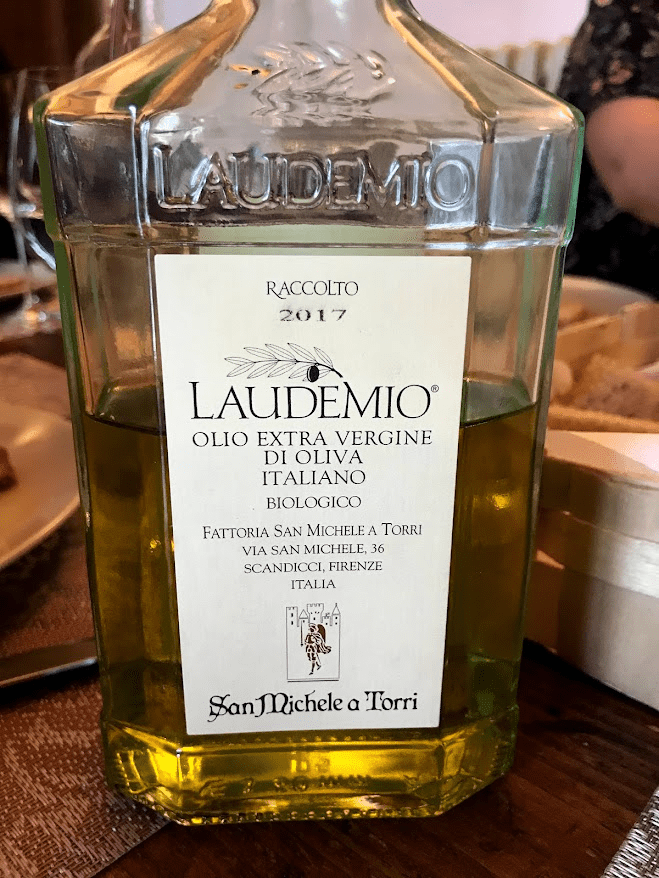
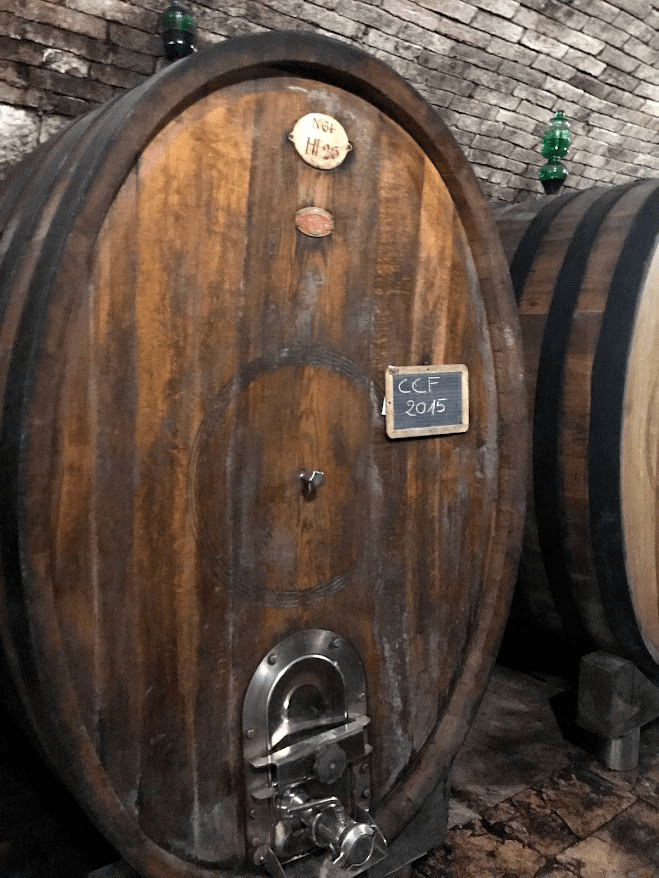
The property has a fascinating history, with remnants dating back to the 1500’s. The most recent transformation followed an epic battle during WWII between German and New Zealand troops. The battle lasted for an entire week and civilians hid in the cellars of the property, some reportedly in wine barrels.
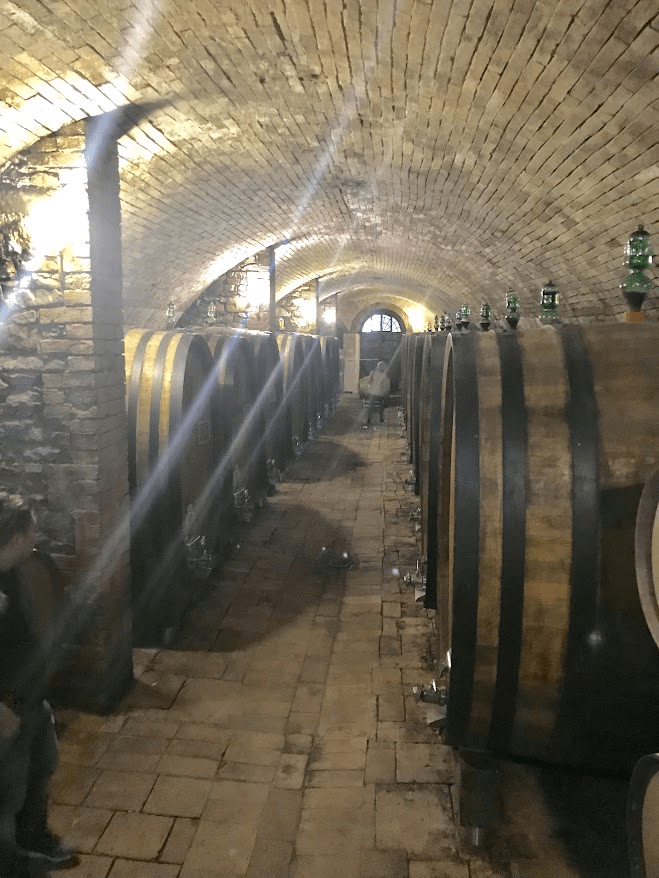
If you find yourself anywhere nearby, I highly recommend a visit.
Fattoria San Michele a Torri|Murtas|2020|IGT|14.5% ABV|$42
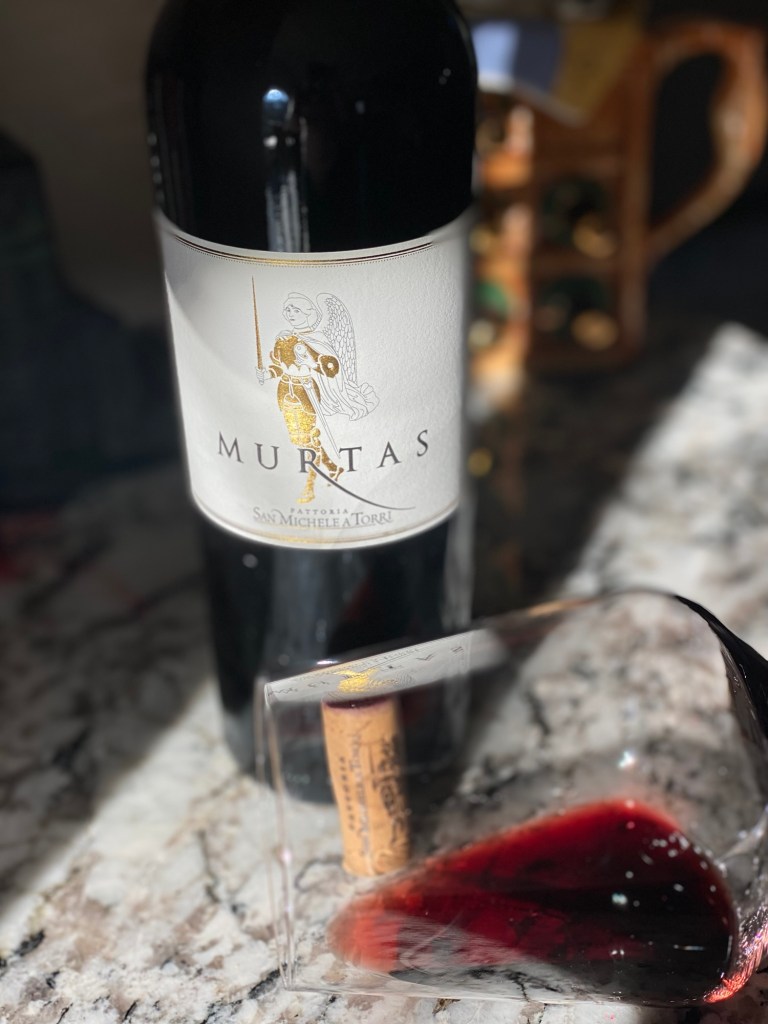
This wine is so expressive. I got aromas of luxardo cherries, cedar, licorice, and an irony, sanguine note.
On the palate the dark cherry and cedar carried over, along with a stone mineral note and salty black olive.
A full mouth feel, a boldness that is perfectly balanced with great acidity and smooth tannins. I am so up in my feelings about this wine I am failing to give you an adequate description.
The grape blend here is 40% Sangiovese, 40% Cabernet Sauvignon, and 20% Colorino, however this can vary slightly from vintage to vintage. The Colorino vines are clones of an old Colorino vine found on the property. Colorino is indigenous to Tuscany but rarely used in modern day.
The grapes are harvested at a slightly overripe state, fermented and aged individually for about 18 months, The wine still qualifies as dry based on residual sugar levels, but does carry a higher ABV. I wonder why they harvest slightly over ripe? Whatever the reason, it works beautifully.
Blending occurs prior to bottling to allow the grapes some time together prior to bottling, and then held for at least 6 months after bottling prior to release.
Named after San Michele a Torri’s Cellar Manager, Murtas Terzuoli, it is the winery’s flagship and most prestigious wine. I can attest. And note the IGT classification. The ever humble Super Tuscan.
It is an esoteric wine. You feel it and experience more than you taste or analyze it. This was my last bottle. I am trying to be all Dr. Seuss about it, better to smile because I experienced it, than cry because it is gone. (insert big sigh here)
Do you have a Super Tuscan wine you love? Or any IGT wine that you absolutely love for that matter? Or a story of a wine you love so much you’ve done crazy things to enjoy it? I would LOVE to hear about it.
 Side Hustle Wino