The #WorldWineTravel writing group is focusing on Lesser Known Regions in May. Susannah Gold of Avvinare is hosting, check out her invite post and join in!
I had just opened a bottle of Mexican wine that I had been planning to post for Cinco de Mayo, but when I saw this month’s event for World Wine Travel, I pivoted.
Did you know that Mexico has a thriving wine region? Cervezas? yes! Tequila? yes! But wine? Also yes!
Mexican wine has been on my radar for a few years, but finding a botte stateside – at least is my area – is near impossible. My husband had a business trip to Mexico City last year and surprised me with this bottle from the duty free shop at the airport.
So where are the wine regions of Mexico? What grapes do they grow you wonder?
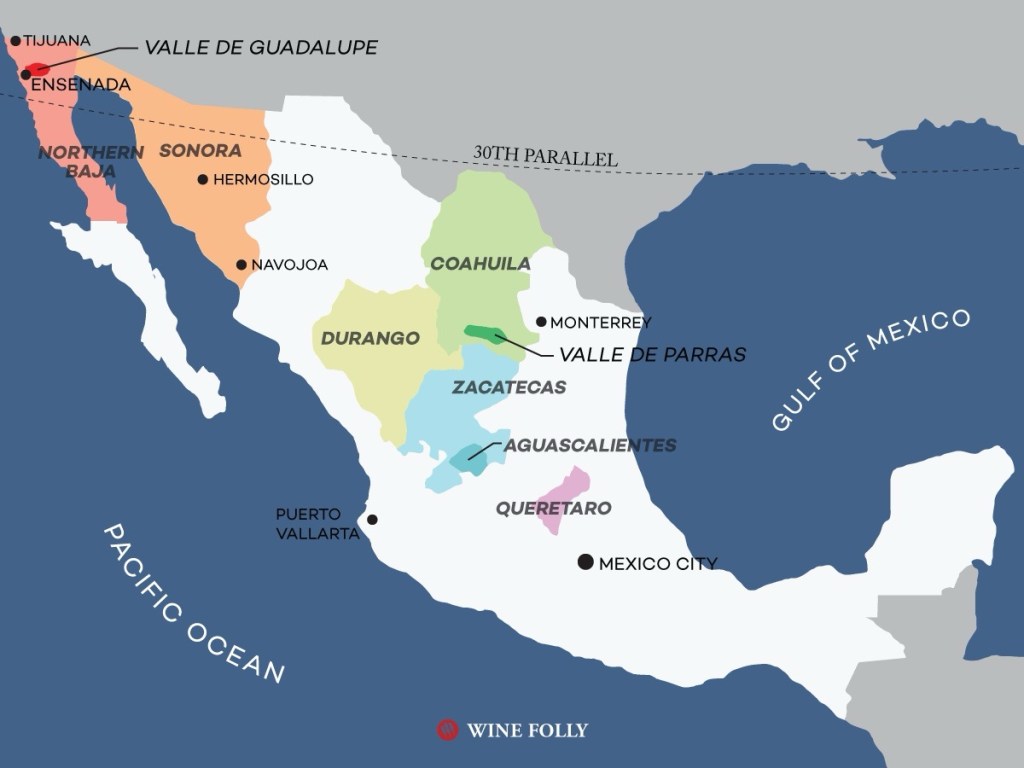
I did not realize that wine regions beyond the Baja peninsula existed in Mexico. Turns out there are grapes growing everywhere! I actually assumed this bottle was from the Valle de Guadalupe, but much to my surprise and delight, it hails from the Guanajuato region in central Mexico! I have a true unicorn here.
We are still going to talk about the Valle de Guadalupe in the northern Baja California region for just a second. It is the center of the country’s wine industry, accounting for about 75-80% of all wines produced. The Valle de Guadalupe has been called the Napa Valley of Mexico, and no one seems to mind. A better compliment for a burgeoning new wine region probably doesn’t exist. In researching this article, you can almost feel the excitement and potential of not only the Valle de Guadalupe, but the entire country.
Mexico is the birthplace of wine cultivation in North America. The first New World vines were planted in the 16th century following the Spanish conquest. Wine growing ebbed and flowed over the centuries in Mexico, for the same reasons as the rest of the world: war, politics, and phylloxera, but it didn’t get its modern day legs under it until the 1980’s.
What a score to have a bottle from the Guanajuato region. Located about 200 miles northwest of Mexico City it sits below the 30th parallel, widely considered to be the southern limit for grape growing regions in the northern hemisphere. Regardless, grapes thrive due to coastal influence, altitude provided by mountains and a largely arid climate that sees torrential rain for a very short period of the year.
A signature grape does not exist for any of the Mexican wine regions. At least not yet. A myriad of Portuguese, French, and Italian grape varietals find their home in Mexico. Not surprisingly, Cabernet Sauvignon takes the top spot, but is nearly tied with a handful of other red grapes from Tempranillo to Nebbiolo. I read conflicting articles claiming Chenin Blanc or Chardonnay to be the top white grape.
I ran across an interesting story regarding Nebbiolo in Mexico. It seems that when plantings thought to be Nebbiolo were brought over from the Piedmont region to Mexico, there might have been several varieties native to Piedmont included among the vines. Wine Enthusiast wrote about it in an article you can read here. Although the article talks specifically about the Baja region, it is an interesting allegation. A very similar thing did happen in Chili with Carmenere, thought for years to be Merlot, so it is entirely possible that it could be the case in Mexico.
So let’s check out this bottle.
Cuna de Tierra|Gran Nebbiolo|2020|13.5% ABV |$790 (MEX)
Cuna de Tierra is located in Dolores Hildago, and is the first the winery of the Guanajuato region.
Experimentations are still happening with regard to what grapes are best suited to the region’s climate. Still a new frontier in regard to wine, there are not a lot of rules and regulations for what grapes can be grown, what wines can be made, or what is put on the label.

This wine is 100% Nebbiolo but Cuna de Tierra offers other reds that blend Cabernet Sauvignon and Tempranillo, or Malbec, Merlot, and Marselan. I think this is not only interesting, but exciting.
Translating to Cradle of the Earth, Cuna de Tierra began in the mid 1990’s with friends Don Juan Manchón and Don Ignacio Vega. Bodegas Vega Manchon resulted in the first commercial release of Cuna de Tierra wines, in 2010. The visitor center and tasting room were completed in 2013. Constructed with native tepetate, it has received awards for its architecture and design. The property also boasts a fine dining restaurant showcasing the freshest regional cuisine.
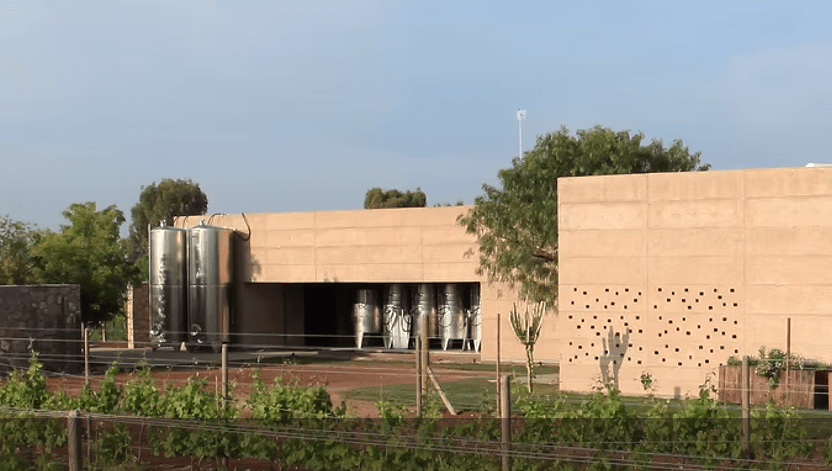

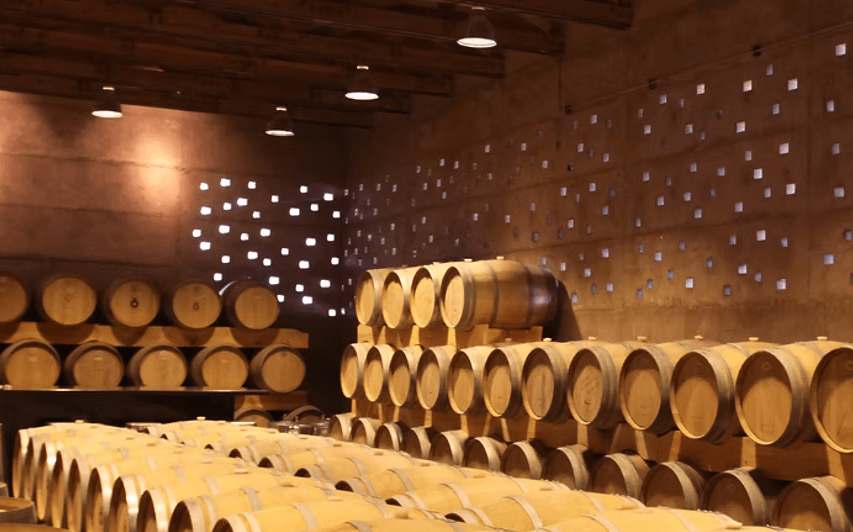
Guanajuato is where Mexico’s War of Independence began. The wine route is called the Valle de Indepencia in honor of it’s history. Cuna de Tierra sits where once the earth was destroyed and scorched by war.
I love that this wine is limited in production and that each bottle is numbered. I did get very confused by the wording regarding the grapes – “a combination of Nebbiolo MX and Nebbiolo Piedmonte” – what?? I reached out to the winery via their Instagram and received an prompt reply:
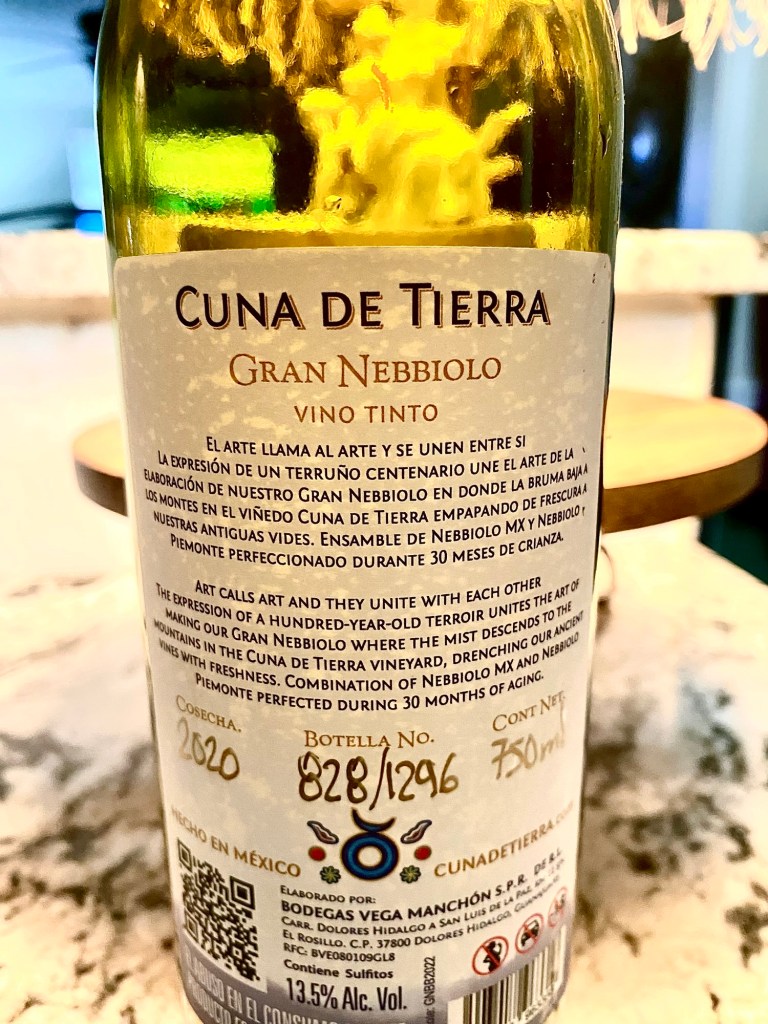
To clarify your question: the wine is made 100% from grapes grown in Mexico. When we refer to Nebbiolo from Piedmont, we’re referring to the grape variety’s origin, not the physical origin of the fruit or juice.
In fact, both Nebbiolo’s used in this wine, have been carefully acclimated and cultivated in our Mexican vineyards. No grapes, juice, or finished wine were imported from abroad.
One question leads to another. Both Nebbiolos? Is one a clone? Two different vineyards? I did not hear back on this, if I do, I will update.
The grapes for this wine were aged in new and second use oak for 18 months and another 12 months in bottle prior to release.
My notes for this wine were aromas of blackberry, vanilla, and candied orange. On the palate I got well integrated tobacco and dark cherry. The overall balance of the wine was excellent with mouthwatering acidity, followed immediately by mouth drying tannins. This made the glass hard to put down, I kept wanting another sip.
I would definitely buy this wine again, if only I could. Cuna de Tierra does have a U.S. importer, Back Alley Imports, but I could not locate a bottle of any Cuna Tierra’s wines to purchase.
This was certainly a fun and educational exploration of Mexican wine – especially the Guanajuato region. Have you had a Mexican wine? I would love to hear about it.
Want to keep exploring lesser known regions? Check out these articles from other #WorldWineTravel writers:
Robin from Crushed Grape Chronicles dishes on “Liechtenstein, Valle d’Aosta and the Umpqua Valley – a few wine regions you may may not be familiar with”
Jennifer from Vino Travels posts “Blaufrankisch of Upstate New York’s Finger Lakes Region”
Martin from Enoflyz Wine Blog shares “Beyond the Usual: Discovering Teran from Slovenia’s Coastal Karst”
Gwendolyn from Wine Predator showcases “Discovering Virginia Wine + Cuisine via the Governor’s Cup Case 2025: 3 Red Blends with Ham, Gratin, Greens”
Andrea from The Quirky Cork brings “Greece’s Most Ancient Grape Finds a Home on the Slopes of Meliton”
Camilla from Culinary Cam writes “Rkatsiteli: An Ancient Grape from the Oldest Wine-Producing Region on Earth”
Terri from Our Good Life joins with “New-to-Me Wine Region: Affinitas Sarga Muskotaly in Hungary”
Wendy from A Day in the Life On The Farm pens “Sipping a Chardonnay from the Fingers Lake Area”
And here at Avvinare, I write about “Discovering Brda in Slovenia”
 Side Hustle Wino
Thanks for this well written and informative post Cathie. Yes, that Nebbiolo MX and Piemonte is confusing, but wow, it sounds like a wonderful, high QPR wine. I hope you can find some more. And your post has reminded me I have a bottle of Mexican Sangiovese from Valle de Gaudalupe I’m now inspired to get to sooner rather than later.
LikeLiked by 1 person
I am so envious of your VdG Sangiovese Martin! Please post about it when you drink it, I can’t wait to hear your thoughts. Such an interesting region.
LikeLike
I have had little opportunity to explore Mexican wines and this was a fascinating article! It’s interesting about the Nebbiolo MX. I wonder if it is a mutation that has developed in the area? I look forward to you hearing more from the producer!
LikeLiked by 1 person
Mexican wines are hard to find in my experience so I was really excited about this one, and now I really want to visit a Mexican wine region.
I hope they respond as well but so far no luck. Like is it a hybrid? I am so curious!
LikeLike
Hi Cathie,
What a fun exploration of Mexican Wine and Nebbiolo to boot. I have written a little about Mexican wines because I received some samples years ago but also have never had the occasion to visit. I was excited to hear about this Nebbiolo from the Guanajuato region as well because as you note many focus on the Valle de Guadalupe. I also love that you went above and beyond to understand what is written on the label. I once received a Malbec from the same region and loved it. I hope to try more Mexican Wines at a future date. Thanks for sharing this fun and informational post. Salud!
LikeLiked by 1 person
Thank you Susannah! I really enjoyed researching this one and would really love to visit a Mexican wine region.
LikeLike
Great article, and I appreciate the backstory! First time I’ve heard of Guanajuato. What a find this wine and reading about it … I’m curious about the climate in this area of Mexico. Sharing your blog article with a friend who travels to Valle de Guadalupe annually and loves the wine.
LikeLiked by 1 person
Thanks Lynn. It was very interesting to me as well. I am wondering if your friend can shed light on the Nebbiolo MX and Nebbiolo Piedmonte?
LikeLiked by 1 person
How interesting! I’ve always been curious about Mexican wine but have yet to get my hands on any. Definitely something to look out for the next time I’m State-side.
LikeLiked by 1 person