This month the Italian Food Wine and Travel group (#ItalianFWT) is exploring Springtime Sparkling wines of Italy, hosted by Jennifer Martin of Vino Travels.
Lambrusco is one of the oldest recorded wines in human history, originating in the Emilia-Romagna region of Italy, near the town of Modena and the Po River. It is thought that perhaps Lambrusco was mentioned in the De Agri Cultura, a farming manual, from 160 BC, but we know for certain that the Etruscans and then the Romans cultivated Lambrusco.
Emilia-Romagna is lauded throughout ancient history for being a very fertile area where other crops and livestock thrived, and therefore humans as well. At the foothills of the Appenines, Lambrusco vines flourished. In the early 1500’s Pope Clement III was known to be a fan of Lambrusco and his doctor encouraged drinking Lambrusco for its health benefits. By 1814, the wines were in such demand that a Count from Modena published an instruction manual for the producing and selling of Lambrusco wines.
So how did a wine from a region that has given birth to many delicious things: the world’s most famous balsamic vinegar, parmigiano reggiano cheese, tortelli and tagliatelle pasta, Bolognese sauce, and delicious cured meats, not to mention Ferrari and Maserati, get such a bad rap?
Well, just like those straw covered bottles of Chianti, it all goes back to mass production for the sake of making a dollar.
Beginning in 1967 the Cantina Cooperative Riunite began exporting Lambrusco. Riunite Lambrusco became the number one imported brand into the U.S. until 2002! This according to Karen MacNeil’s Wine Bible. The cooperative is still thriving in the region today, and owned by 1450 families of vine growers. You can still buy the Riunite jug for around $14.99 here in Atlanta, and the Riunite website claims that Lambrusco is America’s number one selling Italian wine.
Luckily Italian wine exports have come a long way since the 60’s and 70’s, and now produce and export some of the best wines in the world. I think it is fair to say that Lambrusco has not had the turn about that Chianti has had. Many still think of it, as a sticky sweet, bargain basement wine. I am going to share two Lambruscos in this article that were incredibly delicious and that I can’t wait to drink again.
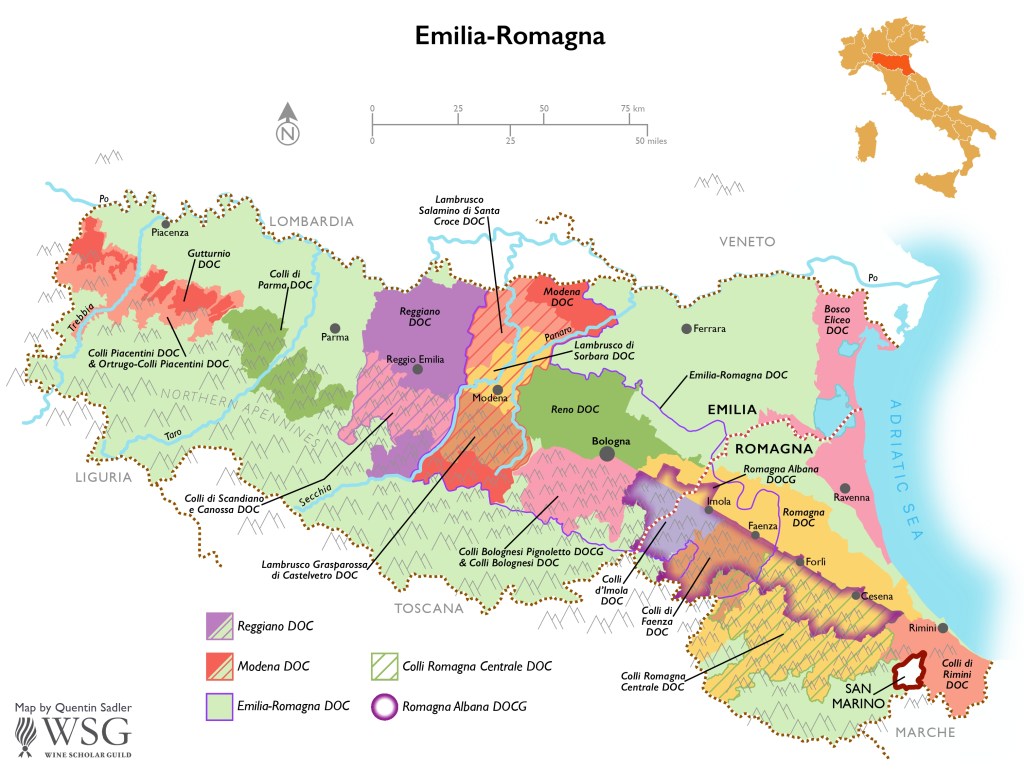
Lambrusco is interesting in that it is named after the variety of grape it is made from. Most Old World wines are named after the region the wine is from rather than the grape. However, Lambrusco is the name of several grape varieties, and the regions, DOC’s (Denominazione di Origine Controllata), are named after the grapes. So technically regions, but also the grape varieties. There are six DOC’s, resulting in Lambrusco wines that have different styles and characteristics.
- Lambrusco Reggiano DOC
- Lambrusco Modena DOC
- Lambrusco Salamino di Santa Croce DOC
- Colli di Scandiano and Conossa DOC
- Lambrusco Grassparossa di Castelvetro DOC
- Lambrusco di Sorbara DOC
There are many native Lambrusco varieties, but the most commonly used are: Lambrusco Salamino, Lambrusco Graparossa, Lambrusco Sorbara, and Lambrusco Maestri. You will note the overlap with the some of the DOC names. The region has quite cold winters, and hot summers, and somewhat unique is that Lambrusco varieties thrive in fertile soil of the plains, as well as the foothills of the Appenine mountains.
Lambrusco is a sparkling wine, traditionally made in the frizzante method. Modern versions are produced using all manner of sparkling methods, from frizzante to, charmat and traditional methods. You can also find Lambrusco wines in a myriad of shades from pale pink to dark red, with varying degrees of sweetness, from Secco (dry) to Dolce.
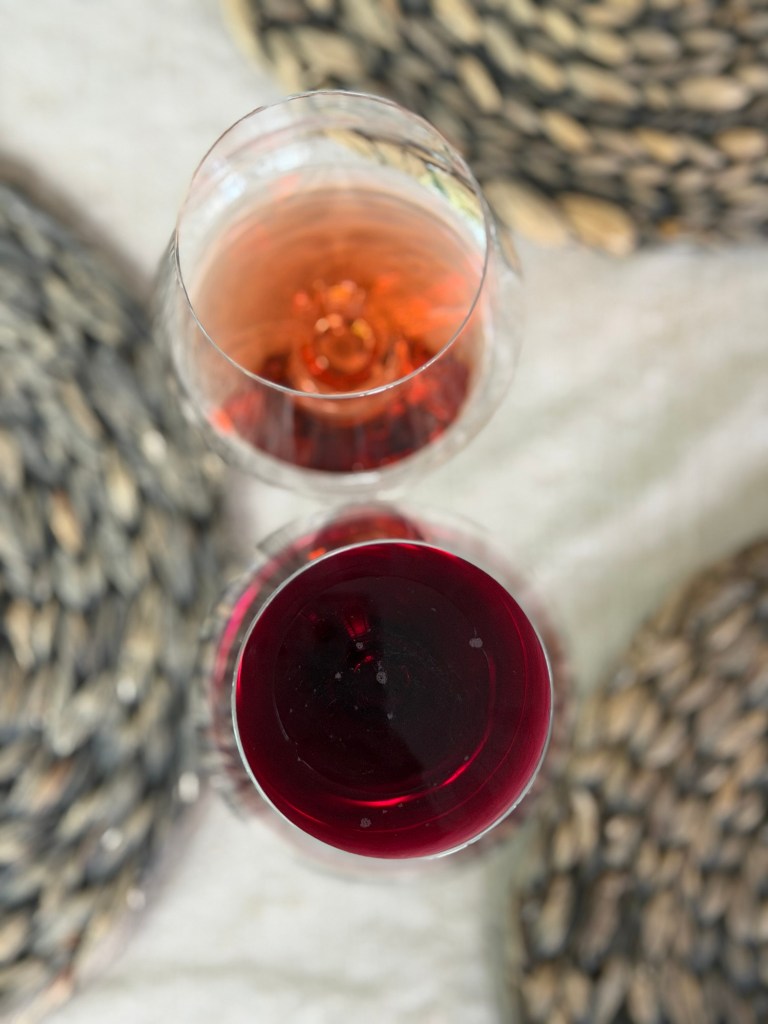
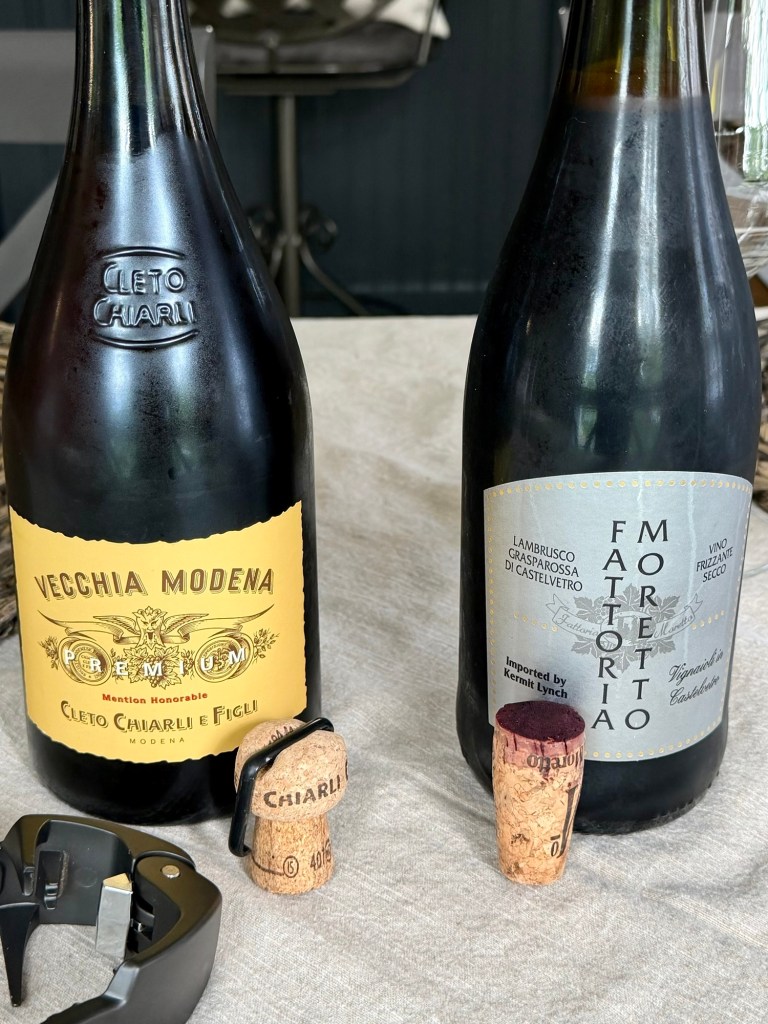
The two wines that we enjoyed for the research of this article were made in the lightest and darkest styles of Lambrusco. One from Lambrusco Sorbara grape, and the other from the Lambrusco Graparossa grape. Check out the cork closures! They are both unique in that you don’t see a staple closure very often, and also you don’t see a sparkling wine closed with a regular cork and foil very often.
We loved both of these wines, although they were wildly different. Let’s take a closer look at each one.
Vecchia Modena|Cleto Chiarli Premium|Lambrusco di Sorbara|11% ABV|$17.99
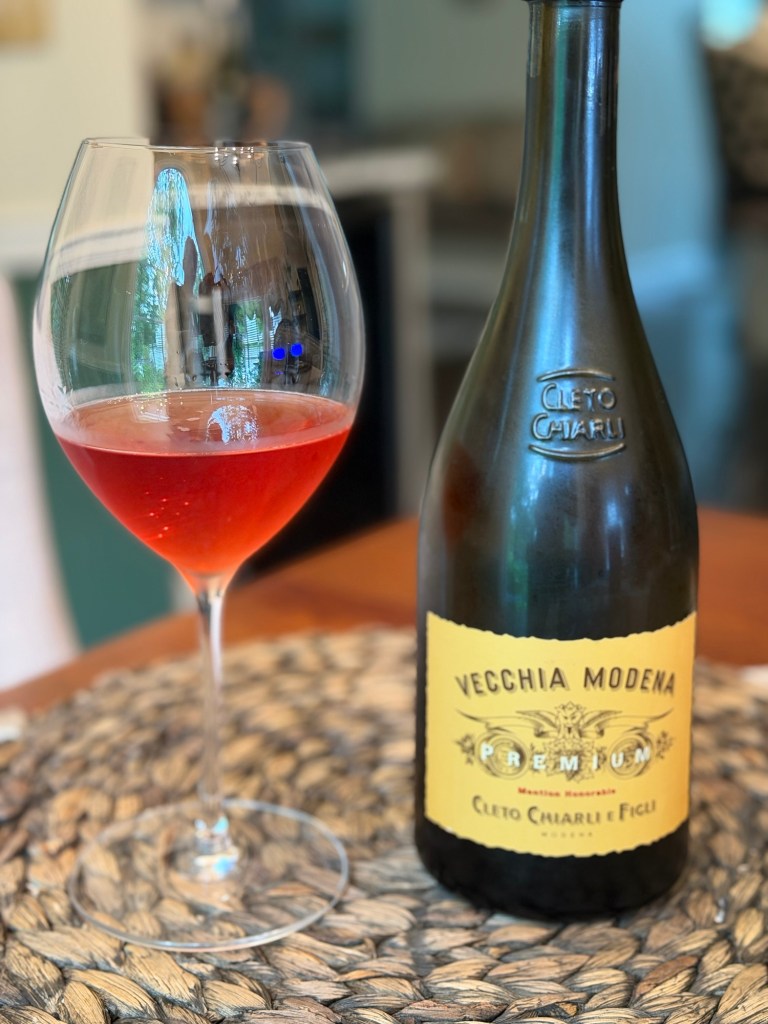
This gorgeous wine is made by Cleto Chiarli, founded in 2000, as an extension of the Chiarli winery that began in Modena in 1860. Cleto Chiarli is the endeavor of five Chiarli cousins, who represent the 5th generation of the family. The goal is to elevate Lambrusco to the finest wines it can produce, and I cannot say it better than they say it themselves:
….so rooted in the local area and history that merely calling them Lambruscos would fail to do them justice. Lambrusco alone is unable to capture the linear profile and mineral tones of a Sorbara or the fleshy, fruity sensuality of a Grasparossa.
The grapes for this wine are hand harvested from several vineyards, with only 18-24 hours of skin contact, resulting in that amazing color. It is worth noting that although this wine uses the Sorbara grape, its designation is Modena. The tech sheet lists only Lambrusco di Sorbara as the grape variety, which would be unusual, but I could not find information on what other grapes, if any, were used.
Lambrusco di Sorbana is considered to be the lightest, most elegant Lambrusco, with floral aromatics and low tannins. This wine was a feast for the eyes, as well as the palate. Very aromatic with aromas of fresh red fruit, and a floral note. The palate had a surprising complexity, with a medium body, great acidity, a scrumptious minerality, and a bitter almond note on the finish that acted like a bit of a palate cleanser. The bubbles were more lively than we expected, and achieved via closed tank (charmat) method.
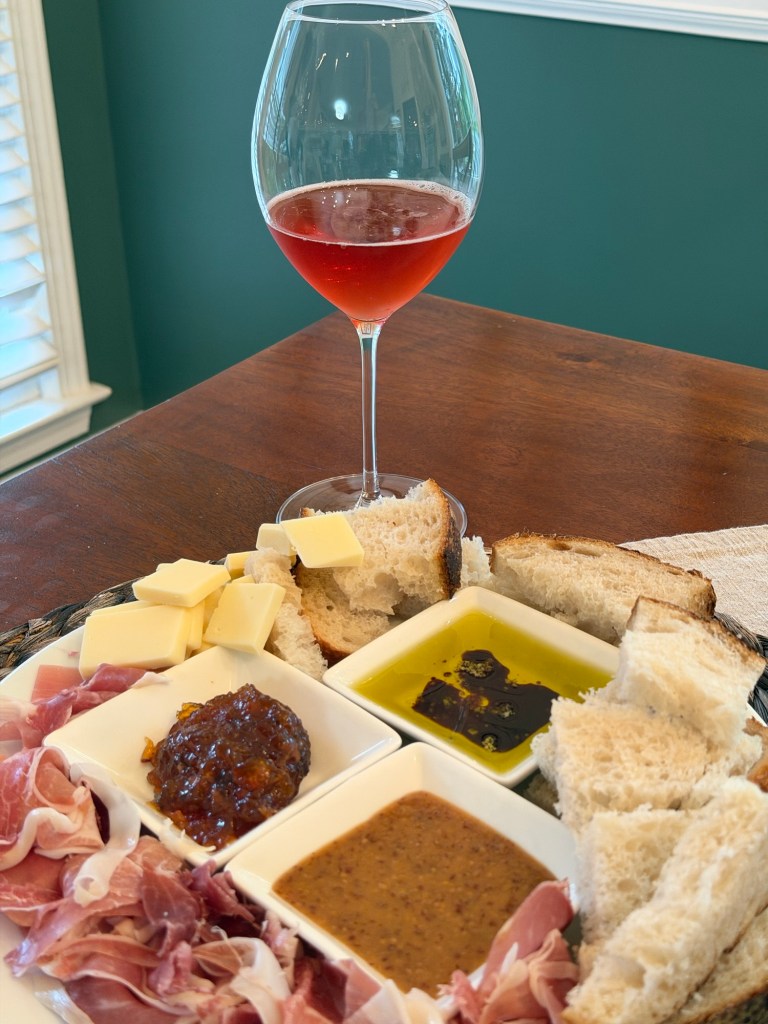
Despite its light and elegant reputation, this wine really sang with food. Specifically with some homemade sourdough, a sweet and spicy mustard, prosciutto, and parmesan. Delish!!! We also tried it with seared lamb chops and parmesan potatoes and felt that the lamb overpowered the wine just a bit.
I am definitely looking forward to another bottle of this wine with an overflowing plate of charcuterie. This scenario would be just as lovely on my porch this summer, or in front of a fire next winter.
Fattoria Moretto|Lambrusco Grasparossa di Castelvetro|Secco| 11.5% ABV|$25.00
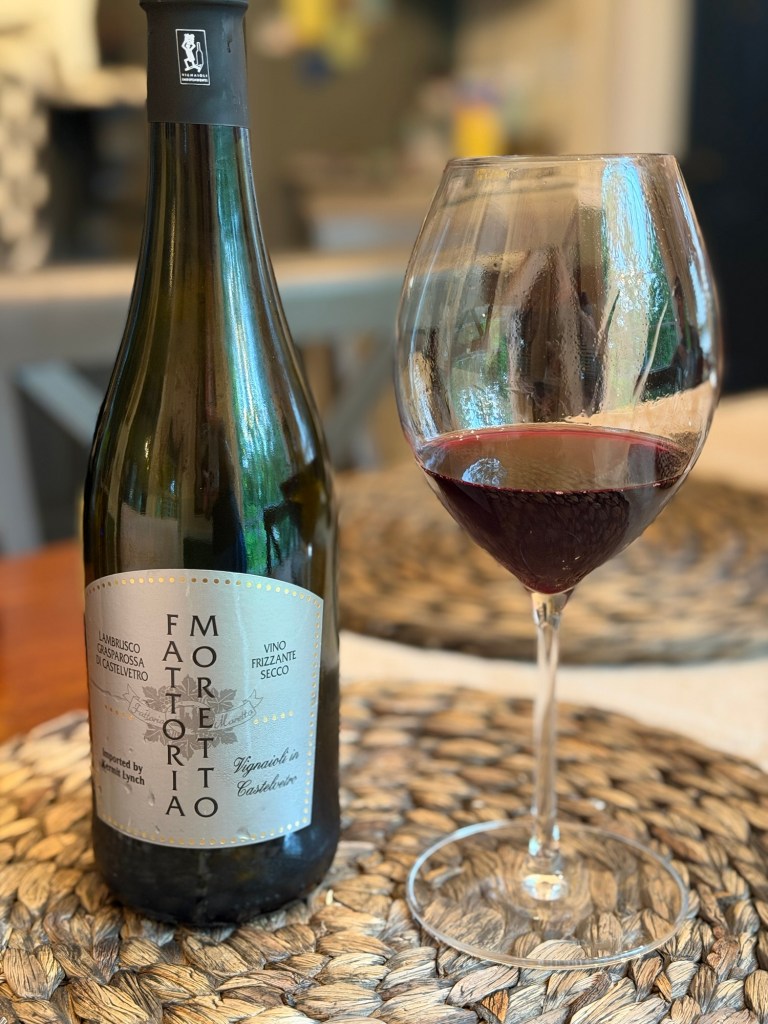
Produced by Fattoria Moretto, located in the heart of the Lambrusco Grasparossa di Castelvetro DOC, this wine is made with 100% Lambrusco Grasparossa grapes. The fattoria has only been producing their wines since 1971, but there commitment to the land, the vines, and the wine certainly come through in this wine.
Fattoria Moretto focuses on the Grasparossa grape, and has been certified organic since 1997. Producing only about 4,200 cases per year, they are the epitome of a small, family owned winery with a passion for what they do.
Structured, complex, this wine was absolutely delicious. The bubbles were milder here than in the previous wine, a true frizzante to my thinking, which admittedly is limited on this subject. This wine had it all. Black fruit, floral notes, an incredible herbal note – dare I throw out the word garrigue without insulting the neighbors to the west? Brambly comes to mind but in the most well balanced way, maybe it is the bubbles pulling it all together?
I was really surprised to see that bold, fatty, gamey, meats are a good pairing for Lambrusco Graparossa. It does make sense when you think of the notion that what grows together goes together – this region is known for cured meats, rich meat sauces, robust cheese.
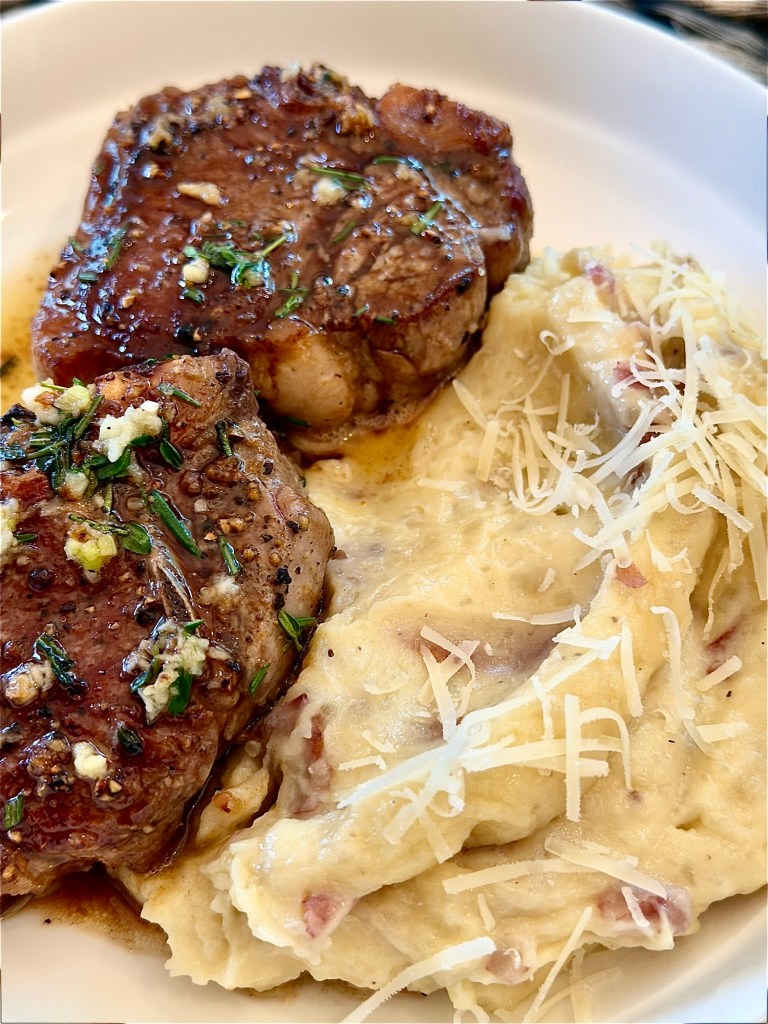
We opted for pan seared lamb chops and mashed parmesan potatoes. My husband and I love to cook, but it has been a recent topic of discussion that we have never made lamb at home. On a day that he commuted to the office, I decided on a whim to participate in this month’s writing event. I had the Fattoria Mattero Lambrusco in the wine fridge, baby potatoes in the pantry, so I just needed the lamb chops. Also we are leaving for Italy this month and I figured why not pregame?
I am not great with meat, this usually falls to my husband and he is a pretty darn good griller/smoker, but on a commute day that was not going to be an option. I researched a few lamb chop recipes and went with this one from Gimme Delicious. First of all, those little lamb loin chops are so cute!! Second of all, they turned out delicious and so that was a huge relief and a nice surprise for John after an hour+ in traffic.
This wine is secco, but the producer makes sure to tell us it is not just dry, it is bone dry. The next evening we tried it with a sausage and pepperoni flatbread and it was outstanding with that as well.
I hope I have inspired you to run out – like right now – and get a bottle of Lambrusco. I loved both of these wines and really had fun with the pairings as well. These are great wines for summer, meant to be served slightly chilled, lower in alcohol, and delicious with big and bold foods.
Please click the on these links to read more articles from my fellow wine writers about the Sparkling wines of Italy:
- Robin from Crushed Grape Chronicles will feature “San Fermo Prosecco by Bellenda with Roasted Beech Mushrooms, Cheesy Polenta, and a tarragon, basil, lemon/pesto”
- Wendy from A Day in the Life on the Farm is “Celebrating our Anniversary with a Hugo Spritz”
- Camilla from Culinary Cam will be taking a look at “Beyond Prosecco: Exploring Other Italian Bubbles”
- Martin from Enofylz Wine Blog is sharing “Rethinking Lambrusco: A Metodo Classico Surprise from Cantina della Volta
- Jennifer from Vino Travels will look at an array of Prosecco with “Bollicine di Primavera: Italy’s Finest Prosecco;
Sources:


I love the difference in color between these two Lambruscos! Such variety! Your lamb looks really delicious also! And I can’t wait to hear all about your upcoming trip to Italy!
LikeLike