Asparagus! With wine? Yes! I have found the perfect pairing for asparagus and it is Albariño.
Saturday, August 1, 2026 was #AlbariñoDay and since I had 3 bottles in the wine fridge, and a Coravin, I decided a celebration of this official wine holiday was in order.
I had oysters on the brain to go with the wines, but before heading to the grocery store, I decided to see what else might be appropriate dinner fare for Albariño. I was so happy to see tomatoes, and goat cheese because I happened to have a ton of tomatoes, and some goat cheese I needed to use.
Then I saw asparagus and I couldn’t resist giving that a try. In my experience asparagus and wine are not the greatest of friends. I saw a picture of some prosciutto wrapped asparagus and remembered I had recently frozen some prosciutto that we just couldn’t get to. Not quite jambon, but close enough! I really only needed oysters and asparagus. Perfect!
The Grape And The Regions
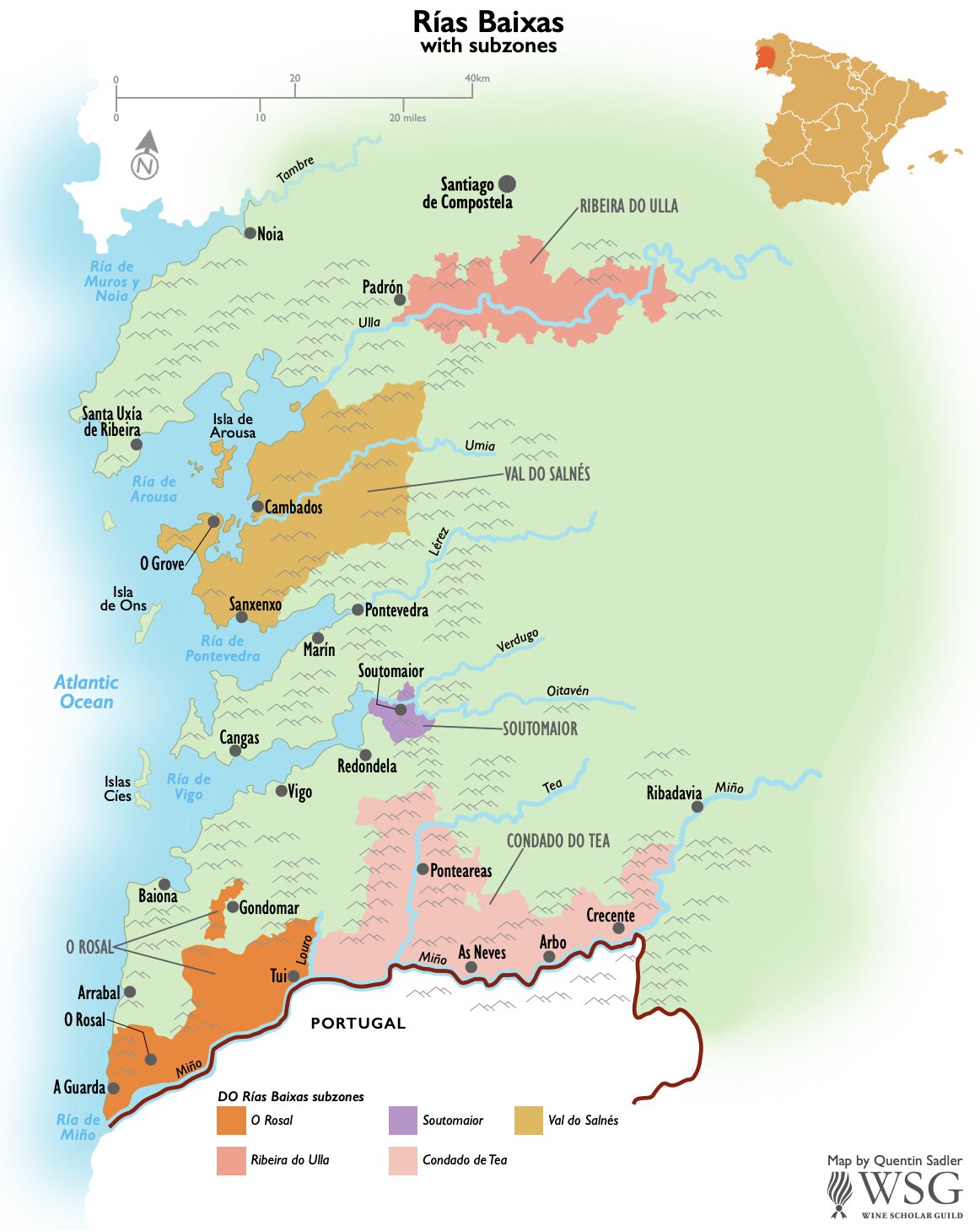
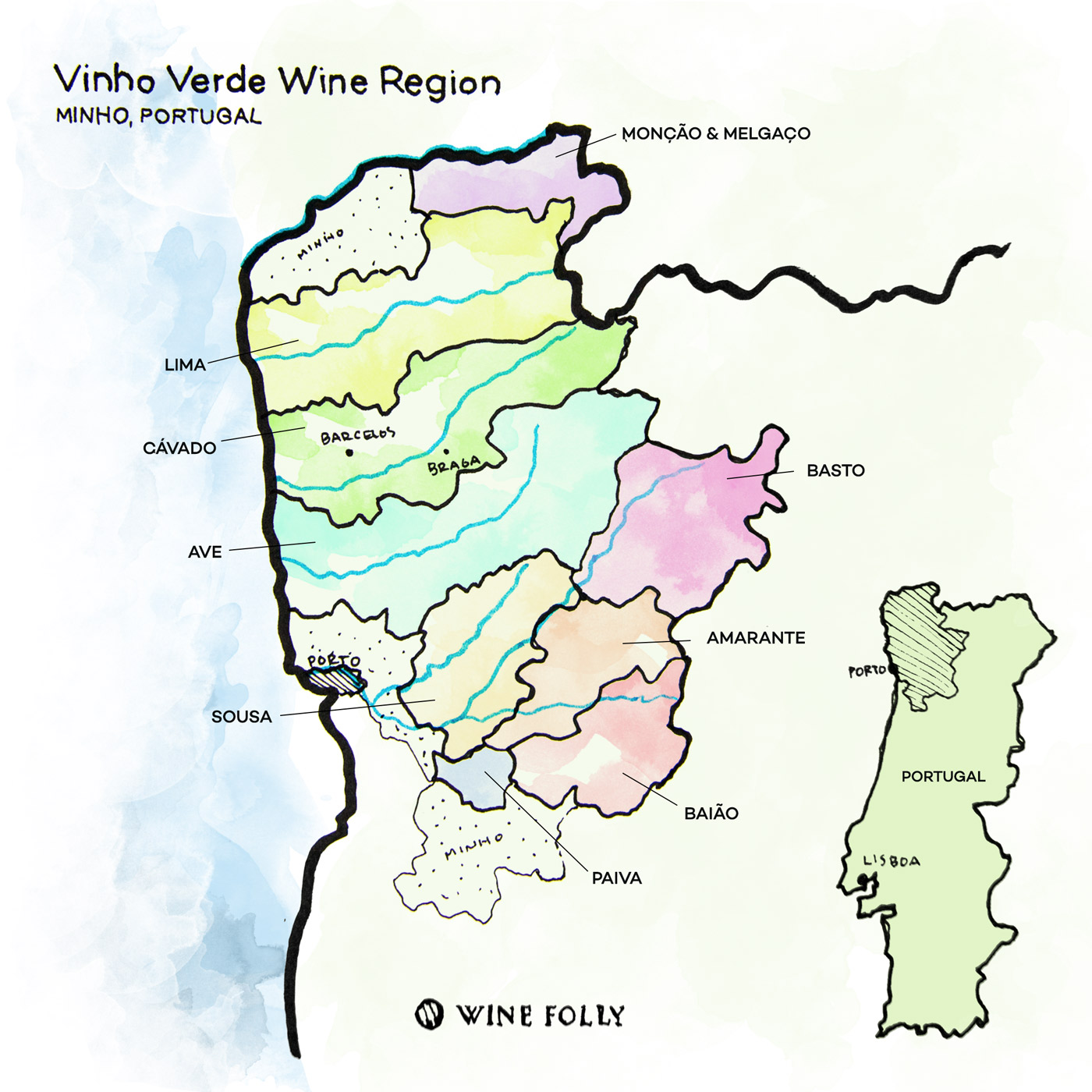
Albariño is a white wine grape best known from the Rías Baixas D.O. in the northwest corner of the Galcia region of Spain. It is also well known from just across the border, in Portugal. Here it is known as Alvarhino, and is the star of the show in Portugal’s Vinho Verde D.O.C.
There are 12 white grape varieties permitted in Rías Baixas, but 95% of the region is planted to Albariño. In Vinho Verde, there are six white varietals permitted, but wines made with Alvarhino are considered to be of the highest quality, producing the regions most structured wines.
According to the Wines of Galacia website, the grape is native to both Spain and Portugal, having grown long the Miho River long before territorial boundaries were put in place by countries.
These maps show the Rías Baixas D.O. (courtesy Wine Scholar Guild), and the Vinho Verde D.O.C. (courtesy Wine Folly) in great detail, including the orientation of the regions to the overall country.
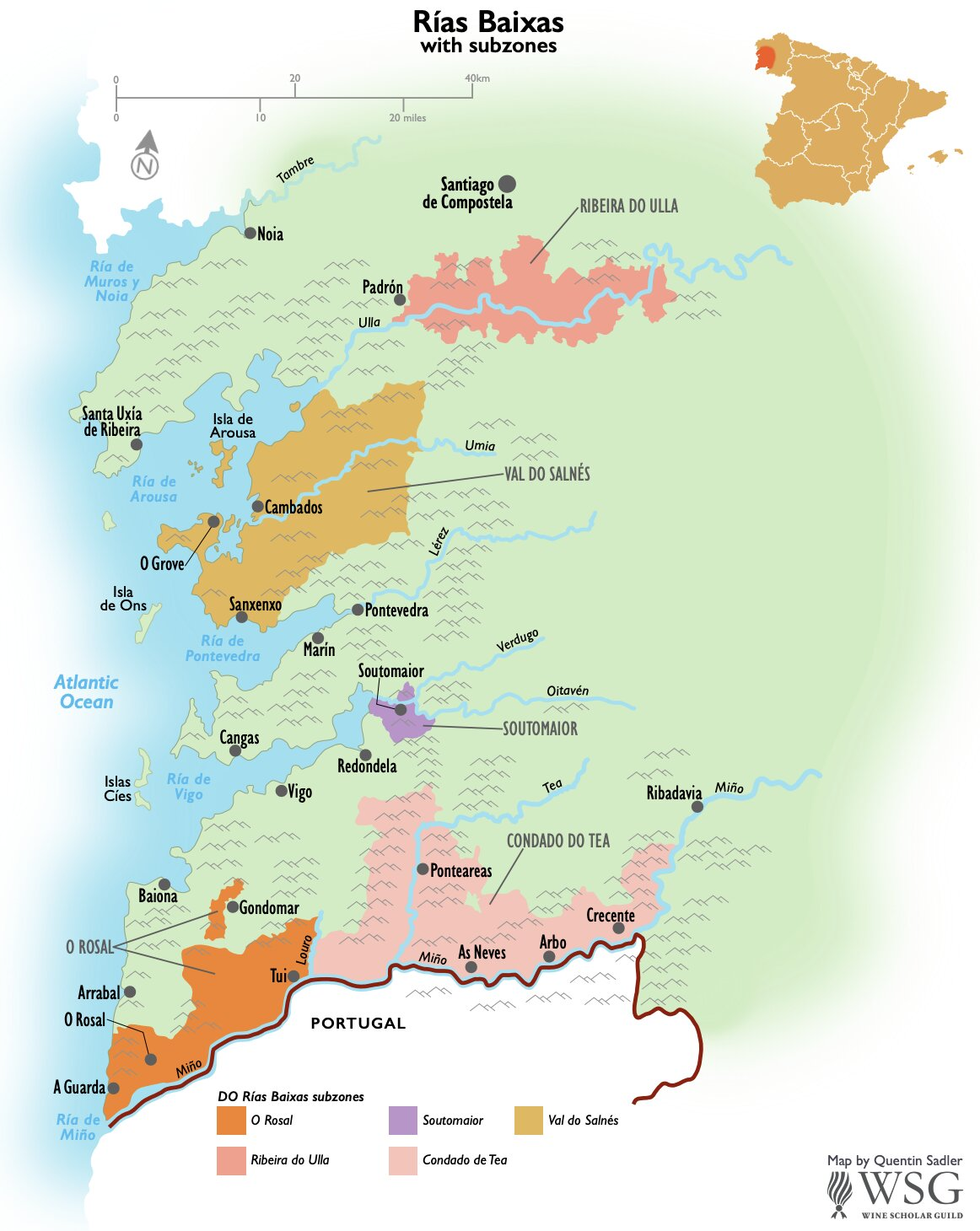
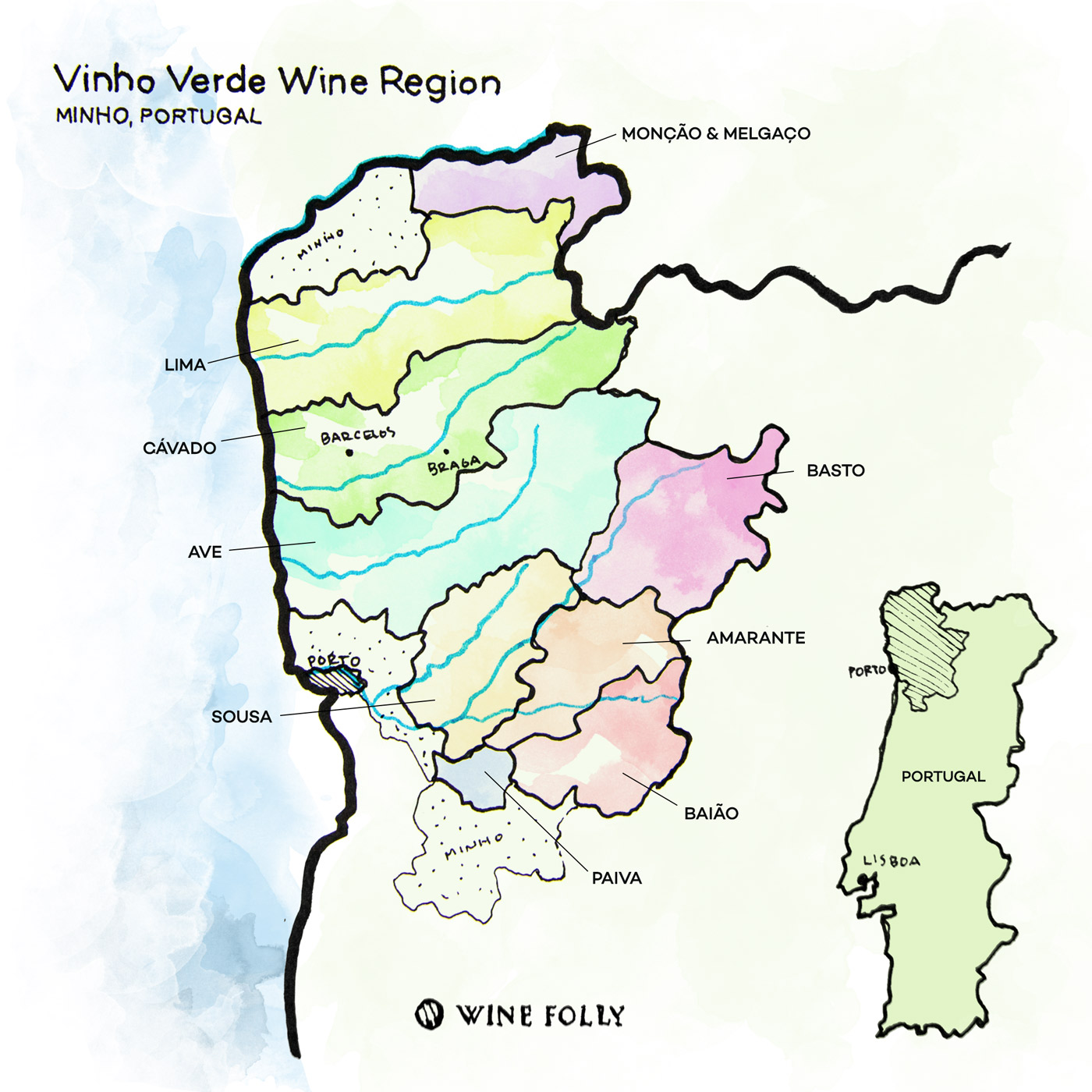
Albariño/Alvarhino wines are known for having a note of salinity, along with aromas and flavors ranging from lemon zest to ripe melon and stone fruits, and even floral and herbal notes. The wines have moderate alcohol levels of 13.5% or less, with high acidity and can be light to medium bodied.
Both wines pair well with all kinds of seafood, soft cheese, fruit, and ham, or other light meats. And asparagus!
The Food
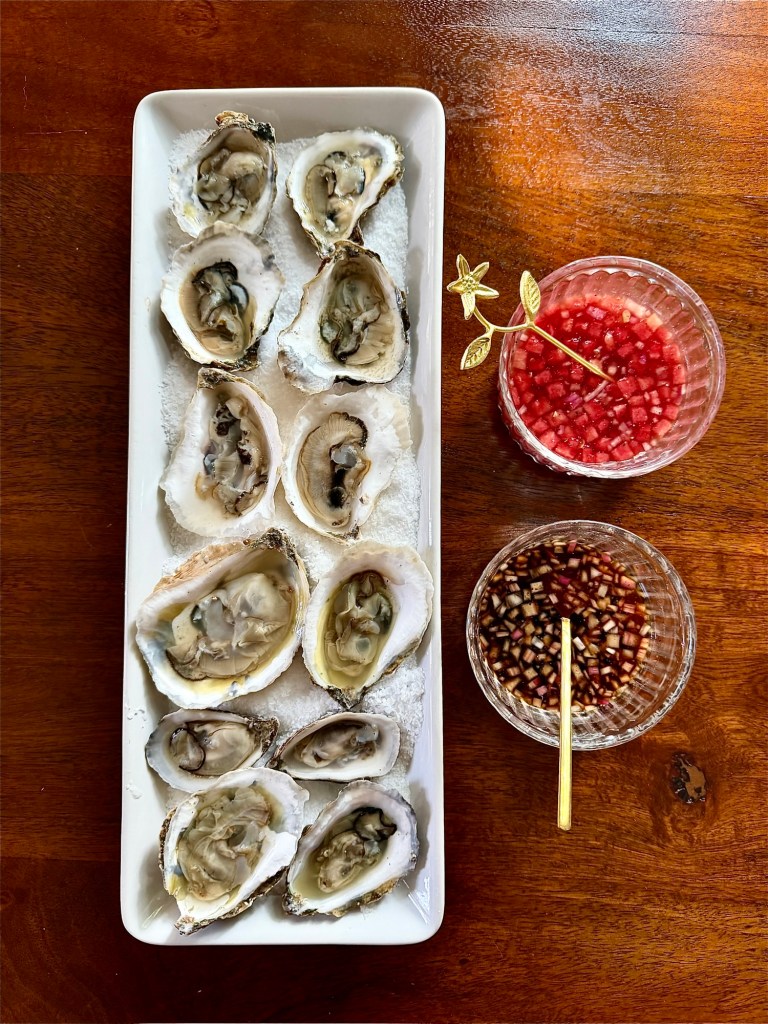
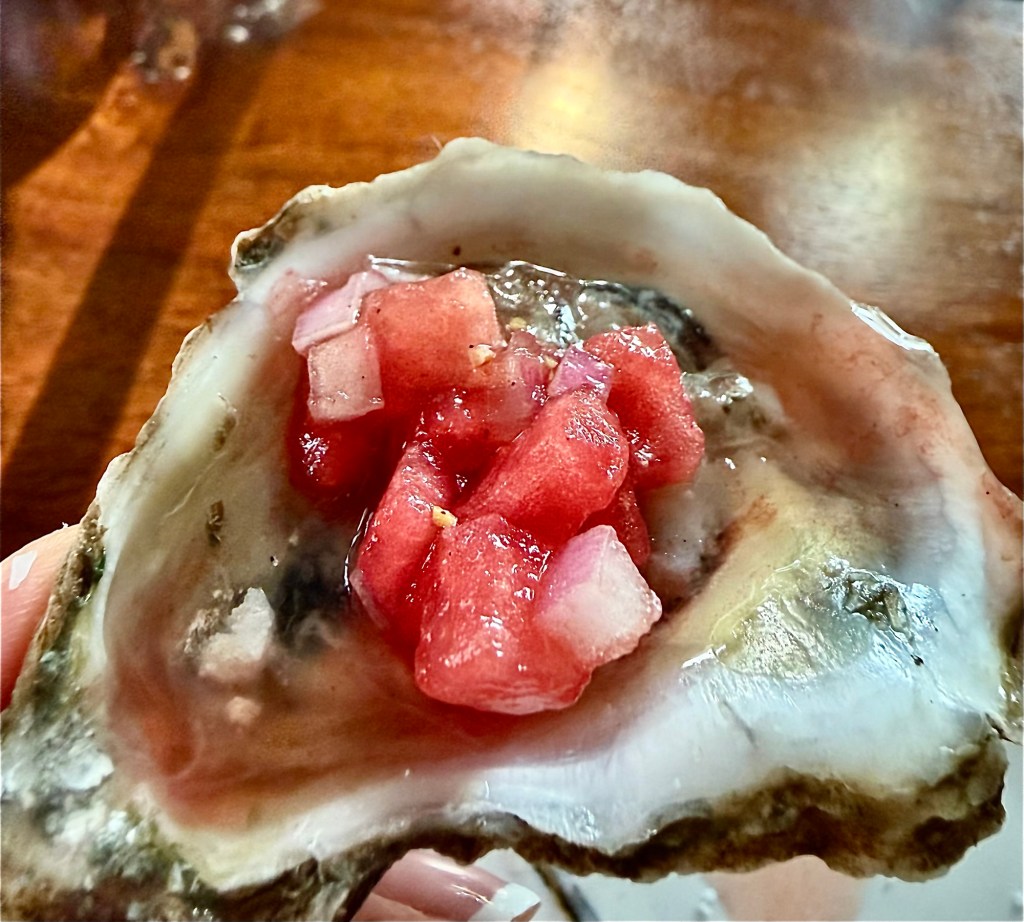
A few years ago, I heard someone talk about oysters with a watermelon mignonette, and it has been filed under things I need to try in my brain for all of this time. I made a regular mignonette with Chardonnay vinegar. and I then tooled around the internet for a watermelon version. I landed on pureeing some watermelon, draining that through a fine mesh, and dicing up some watermelon into teeny cubes and just adding that to the same basic mignonette recipe I had already made. I loved the watermelon version and will definitely do it again – maybe with the addition of lime zest, or teeny tiny diced cucumbers, but I loved it as is and thought it was fabulous with all three wines. My husband preferred the classic mignonette but he is not a huge watermelon fan in general.
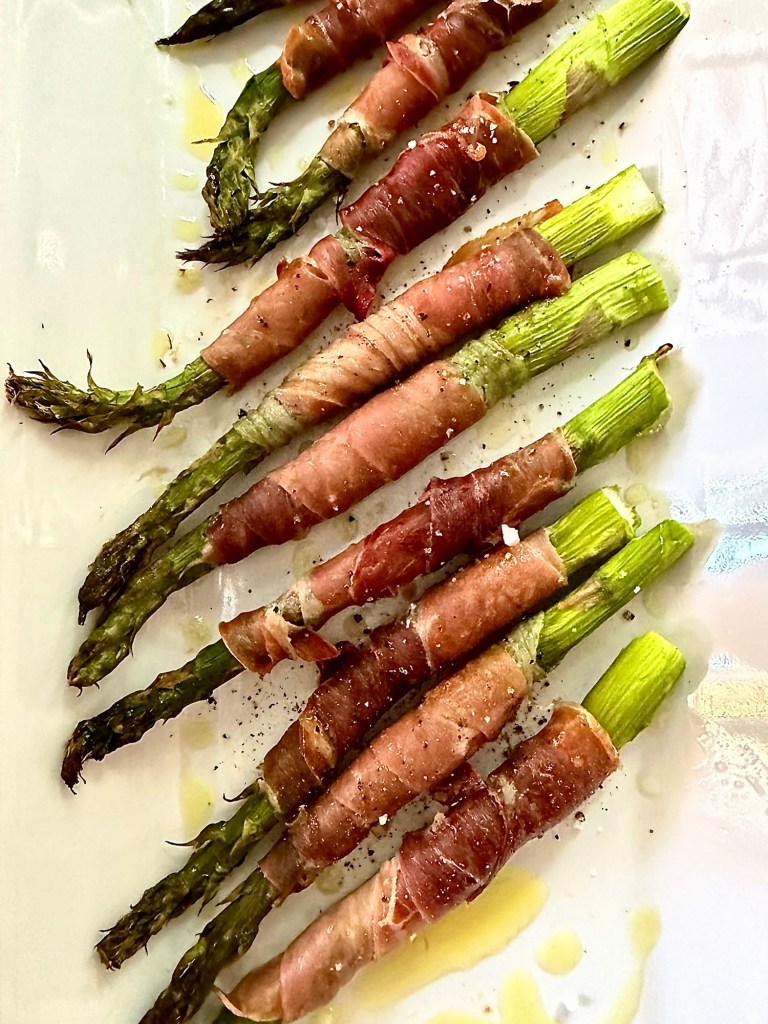
So how about the asparagus? Delicious! Really and truly, even a bite of just the tips with no prosciutto was an excellent pairing with all three of these wines. With the crispy prosciutto in the bite it was heavenly. For this dish I just cut prosciutto slices in half and wrapped each spear of asparagus, and roasted them in the oven on 400 for about 20 minutes. After plating I drizzled with “really good” olive oil (as Ina would say), and a pinch of fleur del sel and fresh ground black pepper. Absolutely scrumptious.
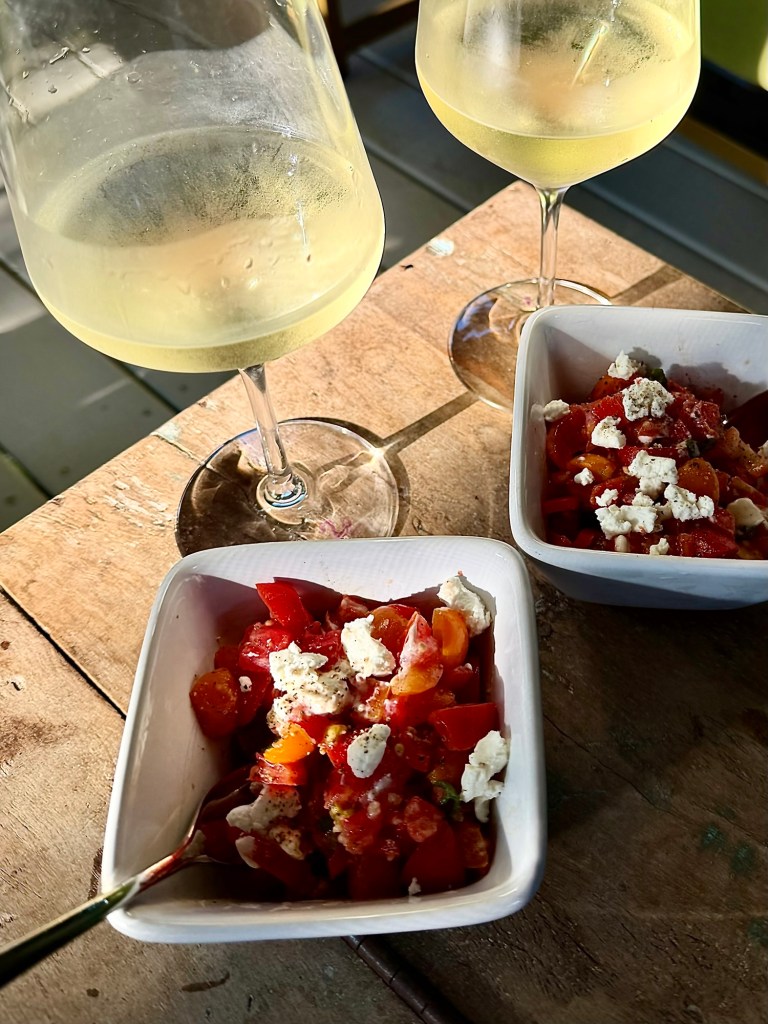
Last but not least, I needed a tomato dish to use up some of my garden tomatoes. Even after delivering to neighbors, I had a ton. I basically made a tomato bruschetta topping (tomatoes, olive oil, red wine vinegar, garlic, salt, pepper), and generously sprinkled in some goat cheese and fresh basil.
This was delicious but the real win here was the goat cheese! I enjoyed this so much I didn’t even miss perfectly toasted bread. Although the tomatoes were delicious too.
This was a great situation from beginning to end. All three dishes were amazing and paired beautifully with all three wines. I am sorry I can’t be more discerning lol!
So what about these wines? One grape, two regions, three producers.
Via Barrosa|Albariño|2024|Rias Baixas|13% ABV|$15.00
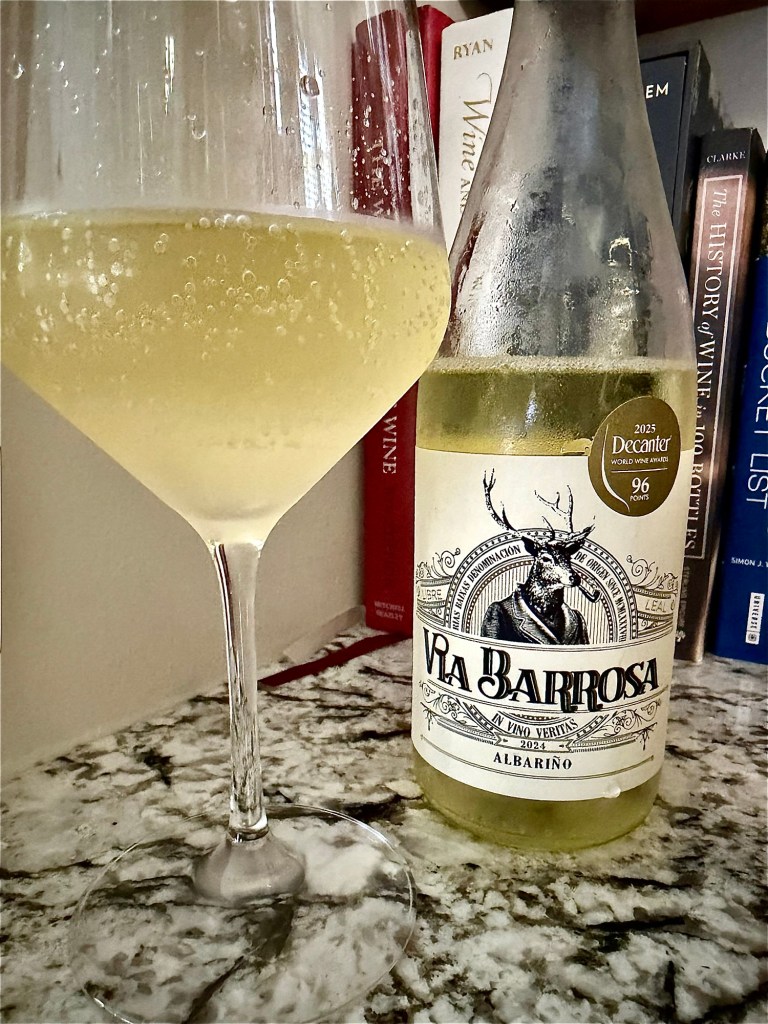
Falling under the umbrella of the Vina Costeira Bodega, the Via Barrosa label claims to be the hipster wines of Galacia. The name Via Barrosa comes from a road that connected Galacia to the Roman Empire. The Bodega began in 1968 and strives to honor the history of the region by cultivating indigenous grapes into quality wines for the modern world.
The grapes come fron the Salnas Valley of Ríax Baixas which is located directly on the Atlantic. They are hand harvested, before undergoing stainless steel fermentation with aging on lees.
This wine had the fullest and creamiest mouthfeel to me, and was solidly medium bodied. Aromas of citrus (and I would say definitely a mix of lemon, lime, grapefruit, not any one in individually), and minerality. On the palate I tasted lemon, peach, the slightest little bit of honeysuckle, and the delicious note of salinity.
As noted above, all three dishes went really well with this wine, but the watermelon mignonette on the oysters was particularly delightful to me with this wine.
Granbazan|Green Label|Albariño|2024|Rias Baixas|13% ABV|$20
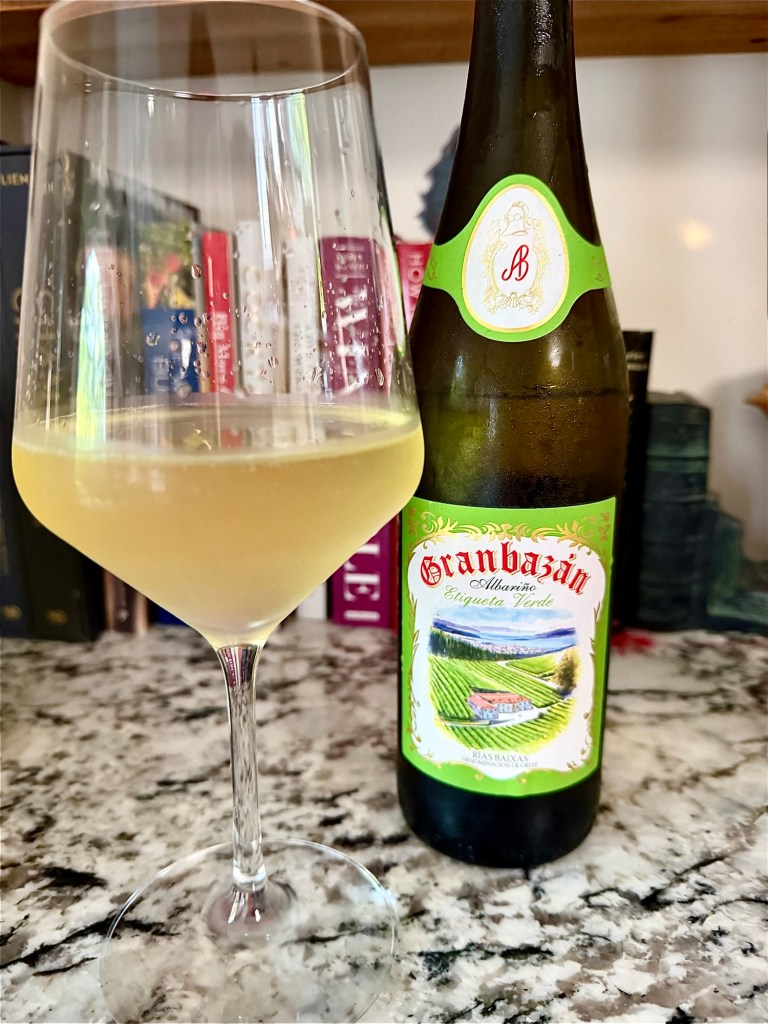
Bodega Granbazan is also located in the Salnes Valley of Rías Baixas, where they work with more than 80 winegrowers to create wines that truly reflect their place. They were one of the earliest producers to bring this region into the modern era, creating world class wines that were true to the land and the environment. A leader in sustainability, they partner with Galacian livestrock breeders to bring sheep into their vineyards each year to help maintain the land with less of a carbon footprint. This kind of thing makes gives me all the good feels.
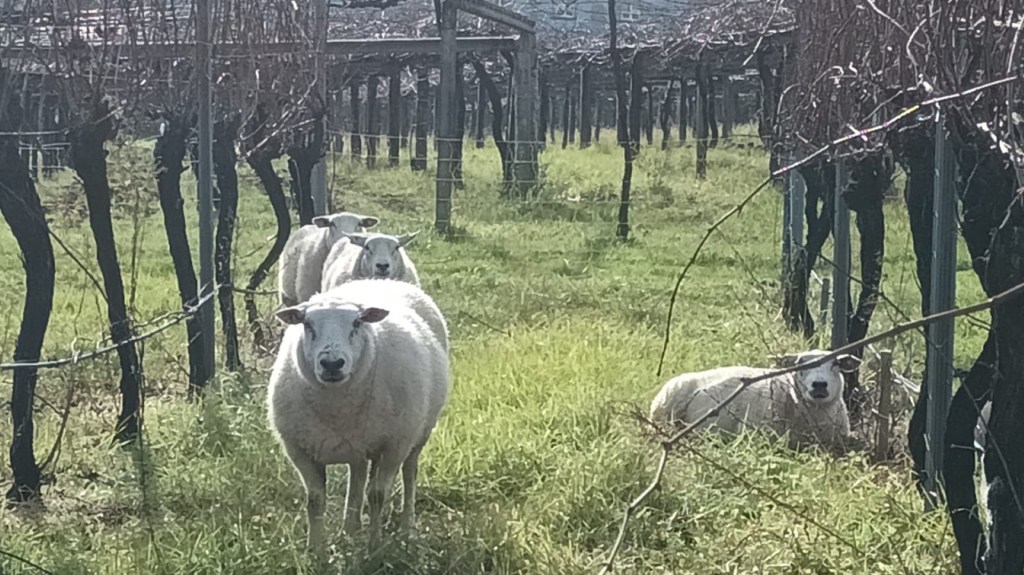
The Etiqueta Verde (Green Label) is the entry level wine from this Bodega and it was a stunner. I thought it was very interesting that this wine includes free run juice, together with lightly macerated juice. Free run juice is the juice that comes naturally from the grapes, without pressing. Considered to be the very best juice, it is not something I have seen at this price point. Stainless steel tank fermentation with indigenous yeasts, the wine sits on the lees for at least for 4 months before bottling.
More aromatic than the first wine, with aromas of citrus, green apple, minerality and a floral note. On the palate all of this carried over but I also got what I called an herbal ocean note. My husband did not agree, but I definitely got an earthy/herbal note. Ha I don’t know but it was there. If anyone uses ocean herbal note in the future I want credit hahaha. Maybe seaweed? But not seaweed.
Mendes & Symington|Contacto|Alvarinho|Vinho Verde|12.5% ABV|$17
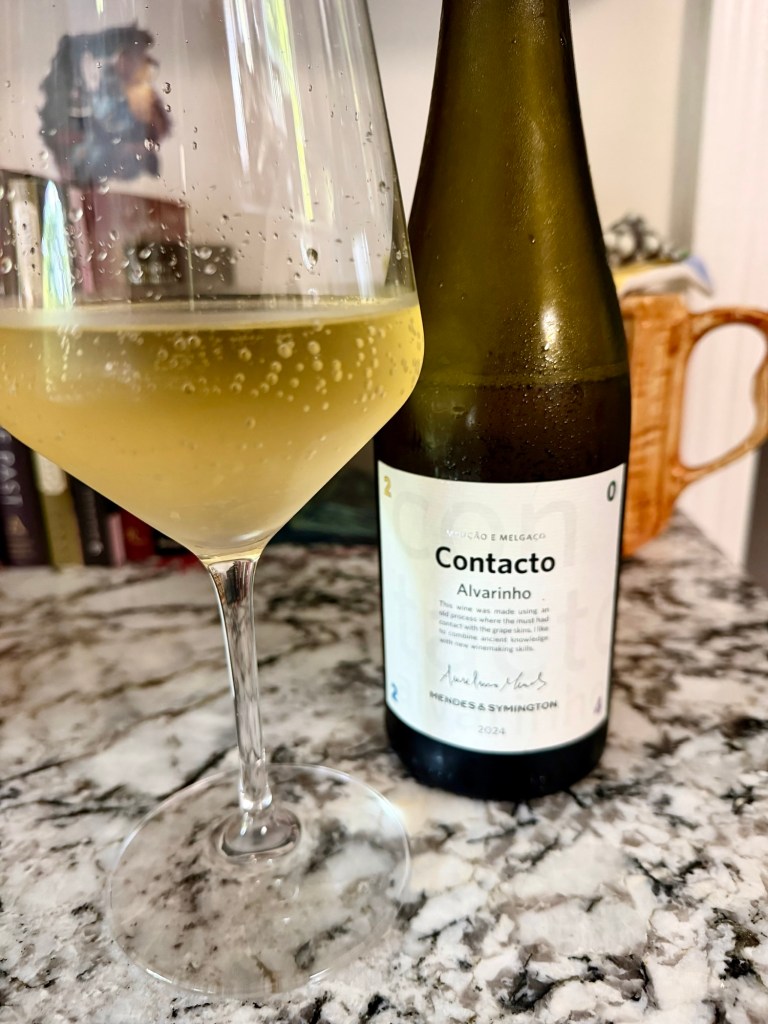
We move into Portugal and the Vinho Verde D.O.C. for this wine, where the producer represents a partnership with one of the Vinho Verde’s best winemakers, Anselmo Mendes, and one of Portugal’s oldest and well known Port houses, the Symington family. Mendes & Symington began just a few short years ago in 2022, but the partnership brings hundreds of years of experience.
The Alvarhino grapes for this wine come from the Monção and Melgaço region within the Vinho Verde D.O.C. Although I couldn’t find information on this specific winery, the parent company – Symington Family Wines – is a dedicated pioneer or sustainable practices in the region. Not only a dedication to the land, but to the people. They are Certified B Corporation and Mission 2025 participant.
I have to be honest, when I think Vinho Verde, I think of a white wine from Portugal with a slight effervescence that is super young (i.e., green), and super cheap. Portugal is working hard to change that old and outdated notion and this wine succeeds on all levels. This wine even has a 10 year aging window.
The grapes are hand harvested, stainless steel fermented, and had 3 months of lees aging. The real surprise was that there is a brief skin contact maceration – hence the Contacto name of the wine. I would not have guessed this on my own, but comparing the colors in hindsight, you can see this wine has the deepest color. Also worth noting is the lower alcohol level on this wine. I love a lower ABV for long summer nights, so I can keep my glass full and not become overly intoxicated.
I thought this wine had the highest acidity and was amazing with all of the food but I wondered if I would enjoy sipping this one alone. The flavors and aromas were beautiful – tropical fruit, orange blossom, raw almond, and of course a citrus and salinity note. I thought the asparagus was particularly good with this wine.
Final Thoughts
What fun this was! All three of the wines were amazingly similar, yet each was its own unique version of the Albarino/Alvarhino grape.
I discovered while writing this that last week included National Oyster Day, on August 5th, and National White Wine Day, on August 4th! I love killing three birds with one stone. Well, that’s not true, I don’t like killing birds at all lol. But, I do love that this post inadvertently celebrated all three “holidays.”
As always, I would love to hear your thoughts on pretty much anything, but especially Albarino!
Cheers.


This is 100% yum all the way around! Haven’t had an alvarhino from Portugal yet. Your example here, with that high (teeth cleansing?) acidity, sounds invigorating.
LikeLiked by 1 person
Definitely seek it out if you can get it by you, it was a really nice wine.
LikeLiked by 1 person